Spaghetti with caramelized onions, cauliflower, and blossomed capers

Spaghetti with Cauliflower, Caramelized Onions, and Blossomed Capers

This is my first installation of a series of posts for the guys. The slightly inept, earnest guys who need to cook a quick, easy, and impressive one-dish dinner. Given that target audience, I have to say that the first one to request this recipe was my sister. So if you are a slightly inept, but earnest cook, this one’s for you, whatever your gender may be.

This pasta is a favorite in our house precisely because it can be cobbled together in as long as it takes the water to boil and the pasta to cook.

Why is this easy? There are just four ingredients.

Why is this special? Fried, “blossomed” capers and caramelized onions with a sweet-soft cauliflower that has just enough texture to create a perfect sauce. The resulting dish is synergistic and transcendent. And, I must add, if there are any, this pasta tastes fabulous reheated for lunch the next day.

This is also a great dish for this awkward season of the year when spring vegetables are barely entering your market, but winter veggies are all but done. Cauliflower is an undervalued treat in pasta and the fact that you can happily just toss it into your pasta pot to boil with the pasta makes it a no-brainer.

Slicing the Onions

So ladies? Gentlemen? Novice-earnest cooks? Listen up. Since you have very few ingredients in this dish, you have to treat each of them nicely. Start with the onions. Caramelizing onions is really not hard to do, but you have to be careful how thickly you cut the onion before cooking. Cut too thick, the caramelizing will take all day long. Also, since you are using a thin, long pasta, it melds beautifully with the pasta if you cut your onions long and thin as well. When you sauté them, you want the onions to go past the point of translucent and soft to a color of….you guessed it, caramel. The sugars break down and your onions will actually sweeten up with no sugar added.

Quartered Cauliflower

A tip for the cauliflower is to remember to use not just the florets (the end of the cauliflower, or the unopened flowers of the plant), but also the stem below it. While you are chopping, taste the raw white stalk just below the florets and compare it with the floret itself. Sweet, right? Don’t dump that part, just chop it up into little cubes about the size of the florets you are going to use.

Finally, you will use another unopened flower in the dish. Capers (or caper berries) are really just unopened buds that have been preserved in brine or directly in salt. If you put about a half-inch of oil in a little pan on high and toss in the rinsed and well-dried capers, they actually pop open and “blossom,” resulting in a crunchy-salty delicious ingredient to your pasta.

For the eager chefs seeking bonus points, I lied. I didn’t count olive oil as one of the four ingredients. I just assumed that your cooking significant-other/roommate/mother has some in the house that you can sneak. However, if you really want to impress, get a bottle of really good olive oil to drizzle over the top of the finished pasta. A good fat is just like salt. It enhances the flavors in your dish and takes it to the next level.

So novice cooks? Go out there and make this dish. Let me know if you have any touches of your own that worked well. If you are missing the meat, I think that pancetta or chopped prosciutto would taste fantastic with this. Just add it near the end of cooking the onions, before tossing in the drained pasta and cauliflower.

Spaghetti with Cauliflower, Caramelized Onions, and Blossomed Capers

Ingredients

1 Package of Spaghetti (I love Barilla’s thin spaghetti for this one)

3 tablespoons olive oil for sautéing

1 large onion

1 medium cauliflower

2-3 tablespoons capers, rinsed well and dried on a paper towel (*See Note below)

Special, fine extra virgin olive oil for drizzling over finished pasta (optional)

Parmigiano or Pecorino Romano for grating (optional)

Hot pepper flakes (optional)

1. Start the pasta water. Boil water in a very large pot. When it comes to a boil, add 2 tablespoons of any kind of cheap salt.

2. Saute the onions. Heat your basic olive oil in a frying pan to medium. Cut your onion in half from top to root end. Place the cut side of each half on your cutting board and carefully cut very thin, long slices of onions. Stir them into the heated oil and stir every couple of minutes. Once they are translucent and soft (after about 10 minutes if you cut them very thin or 15 minutes if you didn’t), turn the heat down to medium-low. Keep stirring occasionally if you don’t want any darker brown bits (but I actually kind of like them that way).

3. Chop the cauliflower. You can do this any way you like. If you need a suggestion, I like taking the entire cauliflower and quartering it. I turn it with the floret-side down on the cutting board and then split it down the stem. I repeat with each half. This makes it easy to cut out the core of the cauliflower and chop it into little 1 inch cubes. In turn, it allows me to break apart all of the little florets with my hands into pieces of roughly the same size. If you like bigger pieces of cauliflower in your pasta, by all means do so. Just cut the stem pieces about the same size so everything cooks at the same rate.

4. Cook spaghetti and cauliflower. Once the pasta water has come to a boil and you have added the salt, toss in the cauliflower and pasta and cook until the pasta is al dente. I like the cauliflower to be softer than if I were serving it as a vegetable side dish since the softer cauliflower breaks down slightly and coats the pasta well.

5. Fry the capers. As soon as you have added the spaghetti and cauliflower, heat 1 inch of oil (canola or olive oil is fine) to high. When it begins to shimmer, add half of the dried capers. They will take about 20-40 seconds to pop open (“blossom”). Carefully fish them out and let them sit on paper towels to absorb the extra oil. Repeat with the remaining capers. They should be crunchy when done correctly.

6. Bring it all together. When the pasta is done cooking, drain the cauliflower and spaghetti and then add to the frying pan with caramelized onions. Toss well to coat. If using, add pepper flakes (you could also add them at the end of cooking the onions) and a couple of glugs of very good extra virgin olive oil. Sprinkle fried capers on top. Grate cheese if you would like, but it’s plenty salty without. This is one of those pastas where vegans do not miss the cheese. (However, I still usually add ample grated cheese.) Enjoy!

*Notes: If you really want to splurge, buy salted capers. These are often imported from either Spain or Italy and are absolutely superior in taste because they don’t get a vinegary flavor that the brined ones have. Whichever you use, give them a good rinse and lay them on a paper towel to dry before frying up.

Posted in Cauliflower, Inept-but-Earnest Cook's Night, Pasta, Vegan | Tagged , , , , , , | 19 Comments

Apple Rosemary Tartine with Aged Gouda

Rosemary-Apple Tartine with Aged Gouda and Pickled Red Onions

This is a little story about a sandwich and a bakery. I make a lot of quick  “from scratch” meals over here. Sometimes lunch is just what my kids are eating (often yogurt and a piece of fruit), but sometimes I want something hot and more sophisticated. One of my favorite meals is an open-faced broiled sandwich, a tartine in French.

Last year the San Francisco Magazine did a feature on many of the mouth-watering sandwiches available in our city. I found the description of one sandwich particularly arresting–an apple gouda sandwich with rosemary on a walnut loaf from a new bakery called Sandbox Bakery in the Bernal Heights neighborhood.

Fuji apples, fresh rosemary, and Rembrandt aged gouda

On this description alone I became inspired to create a tartine style sandwich in my kitchen. I always have a bit of bread in my kitchen, some sweet-tart apples, rosemary in our yard, and Rembrandt aged gouda in my fridge. As you will see in the notes below, the most important steps in this simple, wonderful combination of flavors are slicing the apples really thin and broiling the top until the cheese bubbles and just browns.

Now, I would love to tell you how my tartine compares with that of Sandbox Bakery. The thing is….I never tasted theirs. They feature a different sandwich every day around lunchtime, but I always go in the morning rush, at 7 or 8am.

I have, however, tasted almost every single crunchy, steamy, soft, chocolatey, and fruity breakfast pastry they make. Our house averages about a trip every other week–a pilgrimage really–to this superlative French-Japanese bakery.

Sliced Apples Tossed in Olive Oil and Chopped Rosemary

For you pastry-conoscenti, I think their morning buns and other croissants easily rival those of the acclaimed Tartine bakery in the Mission. Their “melon pan,” a  Japanese brioche pastry with a deceptively simple egg-wash and sugar crunch top is divine. The morning buns are perfectly soft layers of croissant dough with carmelized orange-cinnamon sugar enveloping the outside, giving it a shattering crunch too.  We love the perfectly made scallion cheddar biscuit with its Southern lightness and little nibs of melted cheese.

Fruit croissant with cinnamon apples and pastry cream?

Sour cherry scone?

Valrhona chocolate croissant? Are you drooling yet?

Their perfect De La Paz drip coffee and cappuccinos? Best. Breakfast. Ever.

So, go check out their pastries or even their apple-gouda sandwich if they are serving it that day. I am still curious about how it compares with mine.

Before I give you my recipe, the only thing to keep in mind when making this is that you want your slices of bread (maybe your homemade ciabatta?) to be either stale, or pre-toasted so that the side touching the roasting pan doesn’t become soggy from the moisture of the apples. Also, I love the sour-briny pickled onions and a spicy lettuce piled on top. I was in a hurry this time and forgot the salad, but both the pickled onions and an arugula, watercress, peppercress, etc. play really well with the sweet apple and the aged gouda.

Rosemary-Apple Tartine with Aged Gouda

(Serves 4 as a main course)

Ingredients

12 Large or 16 small slices of old or toasted ciabatta bread (or any artisanal bread you like)

4 Tart-Sweet Apples like Fugi or Pink Lady (preferably organic since I eat the skin)

1-2 tablespoons extra virgin olive oil

1 tablespoon chopped fresh rosemary

12-16 long slices of aged gouda cheese

Sea salt to taste

Garnishes (optional)

Red onions, sliced thinly

Apple Cider Vinegar

Salt to taste

Watercress or arugula (optional)

1. Thinly slice the red onion, salt, and add vinegar just to cover in a small bowl. Let sit minimally 15 minutes or up to a week in the fridge.

2. Slice the apples and toss with rosemary and olive oil. For uniform sized apples, quarter the apple long ways from stem to bottom. This lets you easily chop out the core. Put the apple quarters skin side down and cut thin slices (no more than 1/8 inch thick). Toss in a bowl with the olive oil and chopped rosemary.

3. Arrange slightly overlapping slices of the tossed apples on top of each bread slice and top with a long slice of the aged gouda cheese. I adore the flavor and salt crystals (much like a good Parmigiano) in Rembrandt’s aged gouda.

4. Put under the broiler or in your toaster oven on high until the cheese is bubbling and has begun to carmelize to a light brown.

5. If you made the onions and you have a spicy lettuce like watercress, peppercress, or arugula, arrange that on top of your hot toasts, sprinkle with sea salt, and enjoy.

Posted in Dinner, Lunch | Tagged , , , , | 2 Comments

Perfect Ciabatta Bread

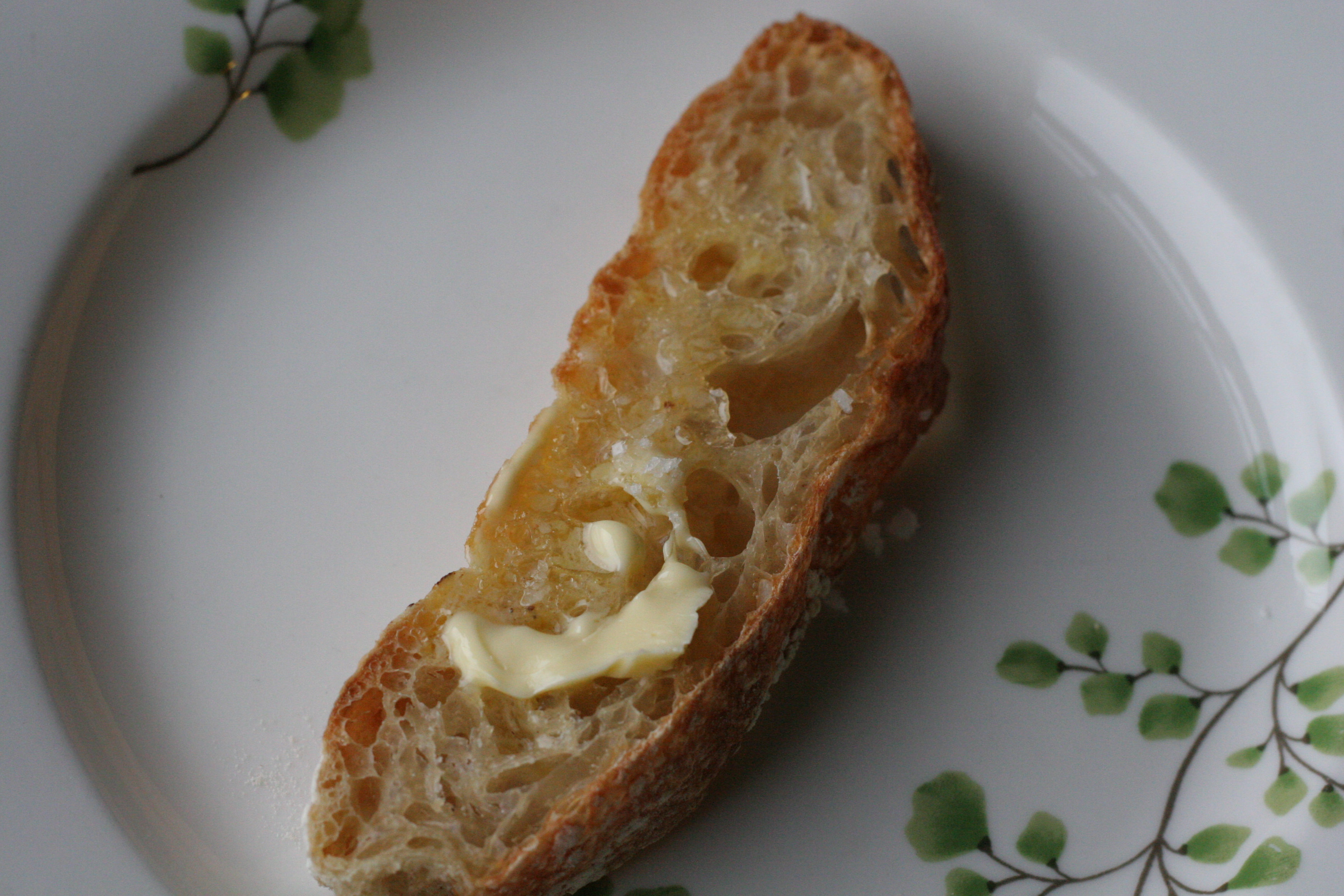
Buttered Ciabatta Toast

I start this post by advising all of you not to buy lumber during the rainiest, stormiest day… nay hour of the year in San Francisco. I have started another vegetable garden in our backyard. We already have a couple of raised beds with sprouts peeking out of the soil, but we (read: my father) need to build another vegetable box for my “chitting” fingerling potatoes (don’t laugh)  and a couple of compost bins. We are planning on putting them together tomorrow so I brilliantly waited until the rainiest day of the past wet week.

Chitting Potatoes

The odds were against me to begin with. Whenever I go to a hardware store or Home Depot I try to really know what I need so I don’t have to be that gal who always asks for help. However, this time I came in dripping wet with an equally wet little toddler. I accepted assistance getting down lumber only to realize that the ten foot long 2”x12” boards were not going to fit in my van. I returned back to the front with my toddler who was dancing to “Kung Fu Fighting” from Home Depot’s intercom, and yes, asked them to help me put them back and exchange them for eight foot long boards.

I paid, and we were getting ready to load the car when suddenly an apocalyptic amount of rain began to fall. So my toddler, and two big guys were absolutely drenched in freezing rain while awkwardly maneuvering stained (ugh!) pressure treated planks of wood around car seats, a stroller, and a bike. I arrived home more soaked than if I had simply jumped into a swimming pool. Strangely, before I stripped down and took a hot shower, the thing I most craved was a hot, buttered piece of ciabatta toast.

You cannot plan for apocalyptic rain (especially when it has been raining for the last eight days). You can, however, plan for ciabatta bread.

Ciabatta cooling on the rack

1. Do you have a pizza stone? Good. (If not, you can still make this. It just won’t be as crispy.)

2. Do you have flour, water, salt, and yeast in your house? Even better.

3. Do you have a mixer? Great, you can make this!

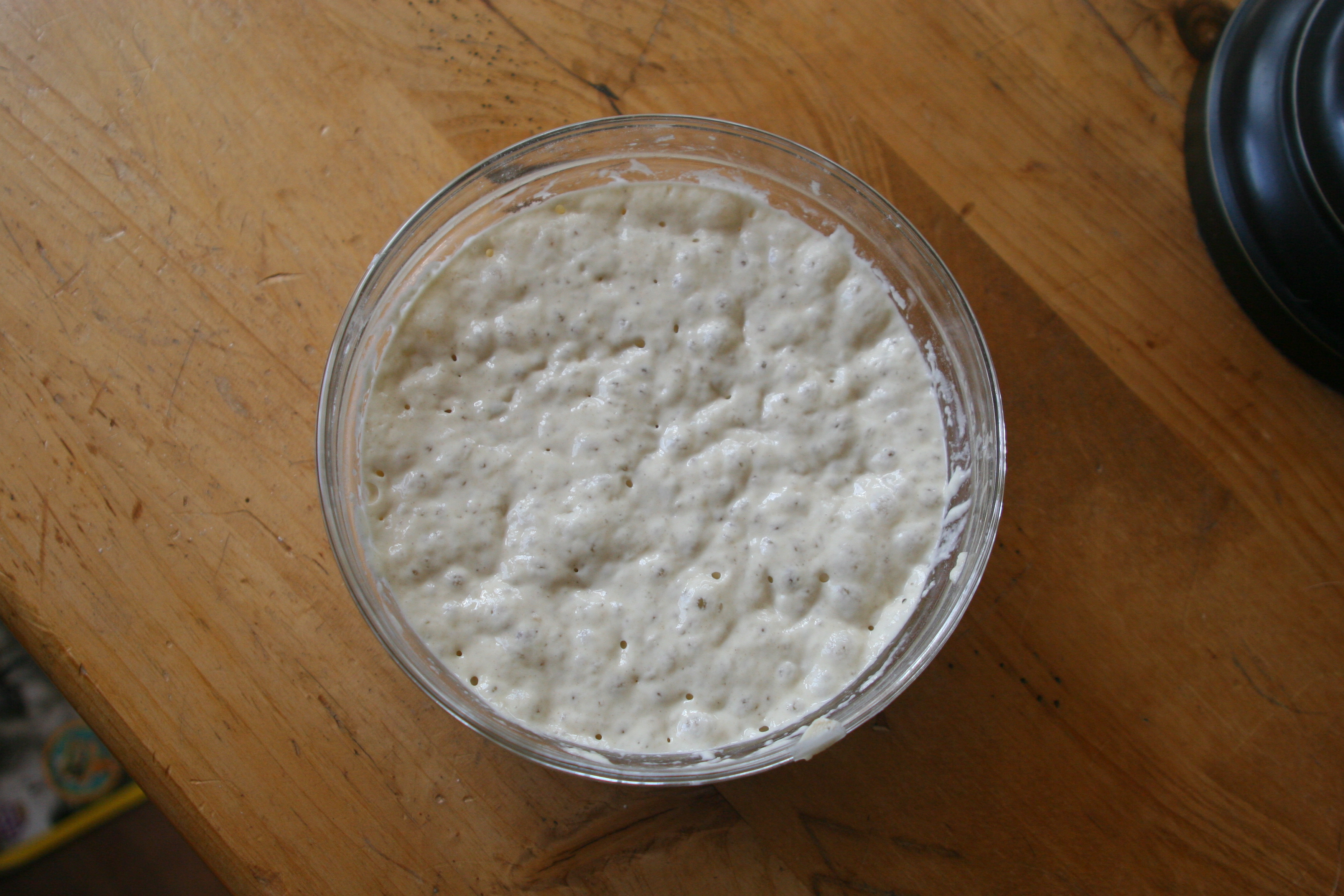
Fully risen "biga" with holes

The secret to incredibly flavorful, heady ciabatta bread is to prepare at least 24 hours ahead of time. You simply mix a small quantity of flour, yeast, and water and leave it alone. This is called a “biga” in Italian. I usually start it in the evening, 36 hours before I plan to cook the bread. Two mornings later, I add the rest of the yeast, flour, salt, and water and then mix the heck out of it in my best friend, my Kitchen Aid. Letting the “biga” really take it’s time allows a slower fermentation process for the yeast, and in turn encourages the development of good, tasty bacteria that add a fabulous, complex flavor to your bread. It is that haunting taste in your mouth after you have actually swallowed a mouthful of bread. Tangy. Almost sour, but not quite. With a dab of butter and a sprinkle of sea salt, it is transcendent.

Fully risen ciabatta dough

My love of ciabatta bread certainly stems from my mother. It is her favorite bread, but she does not prefer it still warm from the oven, but rather because it makes perfect toast. Ciabatta bread elevates the most basic ingredients of flour and water to something magical.

My mom baked quite a bit when I and my sisters were little. I feel like a bit of a cheater giving out this recipe because, contrary to the effort she put in kneading bread, the mixer makes this recipe a piece of cake. In fact, I confess that with my newfound passion of baking bread that I have not bought a loaf of bread in over three months. The warm, yeasty smell it imparts to your kitchen alone is worth taking the trouble.

With any leftover bread you can make more amazing things. Look out for an upcoming post on a favorite open-faced sandwich (“tartine”) that I make over here. Or use slices to make a crunchy-on-the-top, custardy-in-the-middle bread pudding.

You could go purchase lumber in the pouring rain, or you could go begin your biga tonight! Please report back your success stories!

Best Ciabatta Bread

(Adapted from The Bread Bible by Rose Levy Beranbaum)

Makes 2 rustic loaves

Head notes: Make sure to start this at least 24 hours ahead of time for the maximum flavor development. Other helpful things to have around include a scale, parchment paper, ice cubes, and a pizza stone. The scale is really great because flour weights vary so much. I always bake bread with my scale to have precise control. Also, you can halve the recipe if you want, but why would you only want one loaf?

Biga Starter

1 cup plus 1 tablespoon Unbleached all-purpose flour/ 150 grams (Safeway organic, King Arthur, and Gold Medal have worked best. Trader Joe’s brand didn’t quite turn out as nice)

1/8 teaspoon instant yeast

1/2 cup/ 118 grams room temperature water (70-90 degrees)

Actual Dough

2 scant cups/ 272 grams Unbleached all-purpose flour/ 150 grams (see above note about flours)

1/2 teaspoon yeast

1 1/4 teaspoon kosher salt

1 cup/ 236 grams room temperature water

Biga, prepared  from 24 plus hours earlier.

1. Make the biga. Mix all the ingredients for the biga in a large bowl. Cover with plastic and leave at room temperature for at least 6 hours (if warm where you live) or up to 24 hours (if cooler, like here in San Francisco right now). It should triple in size and be filled with bubbles. Refrigerate (up to 3 days before baking) until ready to use, but make sure to take it out at least an hour before preparing the actual dough. The biga has to come to room temperature.

2. Oil a very large bowl. The dough is going to triple in size.

3. When the biga is ready, mix your dough in the mixer bowl. First whisk the flour and yeast together. Then whisk in the salt and add the biga and the room temperature water.

4. Turn your mixer on with the paddle attachment. Mix on low until the dough is moistened.

5.  Turn up the mixer to medium-high speed for 3 or 4 minutes. The dough will be very moist, almost like pancake batter. After a while, you will see strands of gluten develop and pull away from the sides of the mixer. Lower the mixing speed to medium and beat for another 2 to 3 minutes.The dough will pull away from the sides of the bowl. (If not, add another tablespoon or two of flour very slowly, but if you measure everything with a scale, you won’t have this problem).

6. Turn off the machine and detach the paddle. Using the paddle from the mixer, lift the entire dough into the prepared, oiled bowl. It should all just come up in one long, stretchy lump. (Otherwise just scrape it in.) Cover with plastic wrap or a kitchen towel.

7. Let rise until tripled. In my kitchen at about 65 degrees it takes about two and a half hours, but it could take only 1 1/4 hours too.

8. Shape the dough and final rise. Generously dust flour onto a surface in the shape of a rectangle. Carefully and gently scrape half of the dough out (I sometimes use scissors to just cut it off once half has spilled out.) Dust or sift more flour on top. Use your hands to gently push in the sides until it is more rectangular in shape. Remember this is a rustic bread (“ciabatta” means slipper in Italian) so an uneven shape is perfect.

10. On a rimless cookie sheet place a sheet of parchment and dust lightly with flour. Lift the dough and flip (invert) it onto the sheet so top becomes the bottom. Make room on the other side of the sheet for the other loaf of bread. This is a little tricky, but don’t worry if it has a funky shape. It looks beautiful after cooking. Repeat with the rest of the dough to make a second loaf. Sift a lot of flour on top (so it doesn’t stick to the plastic wrap). Cover loosely with plastic wrap and let rise until it is 1 to 1 1/2 inches high, about 2 hours.

11. An hour before baking, put the baking stone (or baking sheet) into the oven on the lowest rack and preheat to 475 degrees. Place a little cast iron skillet or brownie pan underneath it on the floor of the oven to preheat with the stone.

12. Prepare 1/2 cup of ice cubes. Open the oven and slide the parchment off the baking tray and directly onto the hot baking stone or sheet. Put the ice cubes into the iron skillet/brownie pan and quickly shut the door. After 5 minutes turn the oven down to 450 degrees and bake ten more minutes. Quickly open the door and pull out the parchment (for a crispier bottom) and rotate both loaves 180 degrees for even cooking. Cook 10 more minutes, or until the top is deep golden brown.

13. For a crispier crust, at the end of cooking turn off the oven and leave the loaves for 5 minutes with the door ajar (put a covered wooden spoon handle in to prop the door).

14. Take out and let cool on a wire rack. When absolutely cool, brush extra flour off of the surfaces, slice, and enjoy with your favorite butter (and a sprinkle of sea salt). As I mentioned, it makes the best toast, with or without jam. Enjoy!


Posted in Breads | Tagged , , | 9 Comments

Food Blogging in My Dreams Since 2006….

I first stumbled upon food blogs during my leave from graduate school with my newborn son back in 2006. For a gal who reads cookbooks to bed and dreams of new ways to experiment with food, it seemed like a perfect medium for exploring and documenting the hits and the misses of my kitchen.

“Wait until you finish your oral exams,” I told myself. Half a year passed. “Wait until you write up your dissertation proposal.” Another six months came and went. With each milestone on my way to earning my PhD, not to mention the birth of my daughter in 2009, I delayed beginning this blog. This is not to say that I didn’t tell every one of my friends and family members all about the content, sidebars, and subcategories that I would showcase. Woulda, shoulda, coulda.

Well seven years, a husband, and two children later, I finished my doctorate and I am taking a year to finally start things like this food blog that I have been imagining and planning for five years. Check back with me in a couple of months or so to see how this all pans out, but I imagine this blog representing several things.

I will publish mostly original recipes from my home kitchen. I don’t ascribe to any one diet or food trend, but my meals tend to be inspired by food from nearby farmer’s markets, grown by Mariquita Farm (from whom we receive a “mystery box” of organic produce every other week), or from our own backyard. In other words, a largely vegetarian, local, and organic diet. This is not to say I don’t love a good smoked pulled pork (like my sister’s), Moroccan lamb, or bacon. Mmmmm. I just tend to enjoy vegetables and fruit the most. Oops. I meant vegetables, fruit, …..and chocolate.

Yes. This blog will also feature a lot of sweet, decadent treats. If you came for lunch or dinner at my house, you would be fooled into thinking that you had supped on a healthy and balanced meal. Wrong. Wait for the last course please. Part of why I have named this blog la cuoca ciccia (“the chubby cook” in Italian) is because you will be treated to more dessert recipes than are reasonable for a healthy individual. I confess to consuming some sort of dessert twice a day. Every day.

A final theme you will see relates to my own background. I have spent a good deal of time in Italy, living, studying, and visiting my relatives. My first passion for food unquestionably stems from my Italian roots. That being said, I am still a mutt. Much like my PhD work, which focused around the Mediterranean, I am particularly fanatical about the foods of Arab cultures as well.

And a recipe? Ironically, I have had a really hard time figuring out what recipe to start my blog with. In the past few days, I made homemade crumpets, ciabatta bread, croissants, vanilla bean macarons, a Moroccan seven-vegetable couscous, an end-of-winter soup, an endive-butter lettuce salad with honey dressing, shaved pecorino, and toasted hazelnuts….but none of them seemed like the right way to begin.

Instead, I give you my version of my dad’s banana bread recipe. I should start by saying that I categorically hate plain bananas. However, this bread is so fragrant, comforting, and special that I have come back to it and tinkered with it for years.

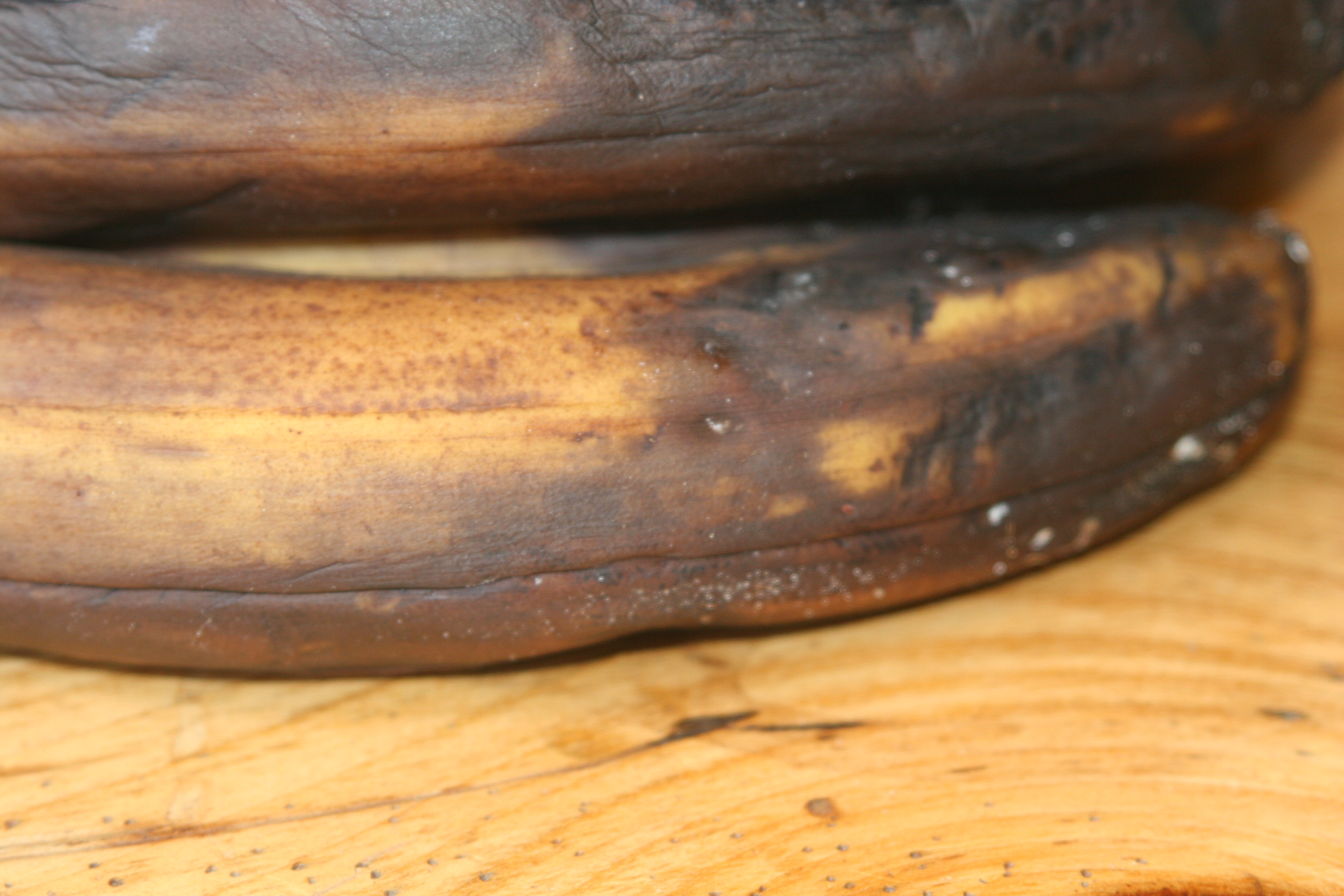
Brown bananas ready for mashing

As with any banana bread, you do yourself a disservice to use yellow bananas. The bananas should have almost completely black skin (but not to the point that they have begun to shrivel).

The key to making this have a tender crumb that doesn’t get mushy several days later (if it last more than a day in your house), is to use a mix of butter and olive oil. Yes, olive oil. I know that there are a couple of cakes out there that make use of olive oil as the primary fat (including one of my favorites), but it makes this banana bread taste mysterious.

The other special touch, one that I credit my father with, is the gooey cinnamon center of the bread. Each slice you cut has a crevice of sticky, spicy cinnamon that keeps the inside of the bread moist and fabulous. As for the spice blend, I continue to play around with it and have tried cardamom, chinese five-spice, and as in this instance toasted, ground anise seed. Let me know what combination you try.

Finally, do toast the slices the next day with a generous slice of fabulous salted butter (I love Irish butter, or cultured). It’s wonderful with your morning coffee or tea.

Thanks family and friends for your encouragement to finally start this.

Cinnamon Olive Oil Banana Bread

1/4 cup extra virgin olive oil

1/4 cup (4 tablespoons) unsalted butter

2 eggs

3/4 cup sugar

1 generous cup mashed bananas, skins black

1/4 cup quinoa flour

1/2-3/4 cup all-purpose unbleached flour

1 cup whole wheat pastry flour (see Note about flours)

1 teaspoon baking powder

1/2 teaspoon baking soda

1 teaspoon salt

spices of your choice (1/2 teaspoon ground cardamom OR 1 teaspoon Chinese five-spice powder OR 1 tsp toasted and ground anise seed)

1 cup toasted and cooled walnuts (optional)

For Cinnamon Sugar Topping:

1/4 cup sugar

1-2 tablespoons cinnamon

1. Preheat the oven to 350 and grease a loaf pan with cooking spray, olive oil, or butter.

2. Cream the olive oil and butter in a stand mixer or Cuisinart mixer.

3. Add the sugar and beat until fluffy.

4. Add the eggs one at a time, scraping down in between additions.

5. Add the mashed bananas and mix until just incorporated.

6. Add all the dry ingredients except topping and mix until just incorporated.

7. If using, add walnuts.

8. Pour batter into prepared, greased loaf pan and flatten with rubber spatula.

9. Sprinkle about a third to a half of the cinnamon-sugar mix in a straight line down the middle of the pan, lengthwise and then push deep into the batter, all the way down the line. Sprinkle the remaining cinnamon-sugar over the rest of the batter.

10. Cook for about 45-55 minutes, turning 180 degrees halfway through the cooking time until a skewer or toothpick inserted comes out clean.

11. Turn out carefully onto a rack to cool (cinnamon-sugar will spill a little, that’s fine).

Notes: I really like the round flavors from the whole wheat flours and the bitter touch from the quinoa flour. You absolutely can make this with just unbleached all-purpose flour. Just use two cups. Alternatively, you could use 1 scant cup plain whole wheat flour and 1 cup all-purpose flour or if you love whole wheat pastry flour you can just use that too (also two cups).

Posted in Breads, Breakfast, Dessert, Whole Grains | Tagged , , , | 19 Comments