Grapefruit Macarons with Grapefruit Curd or Macaron Madness!!!

Stack of strawberry, black sesame, pistachio, vanilla, and grapefruit macarons

Every couple of weeks I crave macarons. No, I do not eat just one like a classy Frenchwoman. As my sister and I shout each fall when we see the signs for the Armenian Food Fair here in San Francisco, “FOOD FESTIVAL!” (Must be virtually belched out in a Chris Farley “Van-down-by-the-river” tone.) As in, I eat a lot.

I have been obsessed with eating macarons for almost a decade now (yikes!), but I never tried my hand at actually making them until last year.

I am not going to lie. These are not the easiest cookie to make. They are a bit fussy. They take a mixer, a pastry bag or cut plastic bag, and you have to let them rest about a half hour before cooking them. If you make the filling, that takes time too.

But look at them!

Macaron madness!

They are heavenly. To say that a perfect macaron is a treat is an egregious understatement. Being a derivative of the meringue family, the shell is light and soft with a crackly outside. The buttercream recipe that I use here tastes a bit like custard, given that its base consists of egg yolks. The two together are perfect for dessert. Or for an afternoon snack. Or for elevensies.
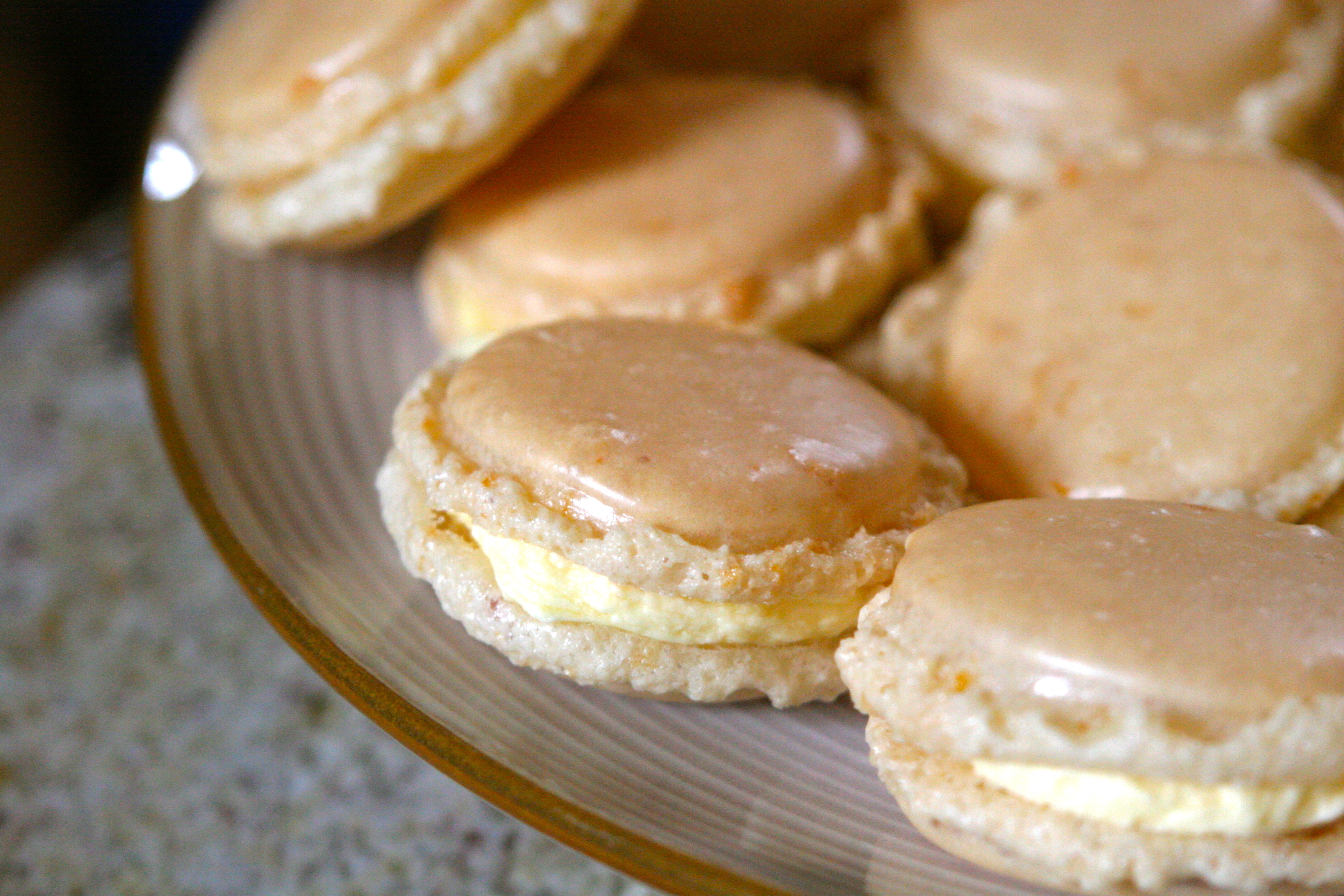
Grapefruit Macarons with Grapefruit Curd Buttercream

Over the holiday weekend, I made five types of macarons for an Easter get together: Vanilla Bean, Pistachio-Cardamom, Strawberry, Toasted Black Sesame, and Grapefruit. All of them tasted quite different, but for whatever reason, the one that I was most proud of and that I kept coming back to (as did everyone else–I ran out of them before the others), was the Grapefruit macaron.

I have been inventing this cookie in my head for a couple of weeks. It had to begin with grapefruit curd. I keep buying the end of this year’s California-grown grapefruit, but my family consumes them all before I have a chance to make it. This time I held aside two grapefruit from the hoarders. You see, it is not too late to make a lovely batch of seasonal citrus curd. The Meyer lemon trees at our house are still going strong (and often produce well into fall here in San Francisco). If you have never tried making a citrus curd, let alone the good old standby lemon curd, it is really easy and divine.

Grapefruit Curd

I decided that I wanted a rosier color so I used Ruby Red grapefruit. However, this type tends to have less tang then its yellow counterpart so I added a little Meyer lemon juice as well, just to lively it up. (I had some glorious notions of turning the color even rosier with a little blood orange, but I think their season is long gone and I wasn’t going to fork out three dollars for one Chilean blood orange.) I only used the grapefruit zest so that its flavor would dominate.

Put into sterile jars (just boil them for 10 minutes, let dry, and fill), the curd will last several weeks in the fridge so you can use it for lots of recipes (more on that very soon) or just eat it by the spoonful.

Plate of Macarons

Now for the macarons. I’ll put everything down below in my recipe, but I do have some tips that I swear by after making these several dozen times.

Use a Scale. Be precise with these cookies. If you are off on the measurements they do not bake correctly.

Age the Egg Whites. First, do use “aged” egg whites. If you have some left over in the fridge or freezer, you are good to go. If not, simply separate the eggs and leave them in the fridge for at least a day. This dehydrates them ever so slightly.

Sift. It doesn’t matter what kind of nuts you use. Almonds, pistachios, walnuts, sliced, whole, blanched, unblanched. What does matter is that you sift out the extra pieces so that all that remains is the floury soft powdered sugar and nuts. I tend to slightly overmeasure everything at the beginning to account for the pieces that I simply cannot pulverize in my Cuisenart, no matter how hard I try.

Macronage Baby. “Macronage” is simply the term for how you actually mix everything together. I do between 40 and 50 very quick turns, scraping the bowl each time, until the batter looks like lava. Do not overdo it. To test if the batter is really ready, you spoon a little onto a plate. You do not want it to have a little tip, but instead fall down on itself and smooth itself out. You want pretty flat little circles, not high puffy batter like a classic meringue.

Rap and Rest. After you have piped the batter into little circles, rap underneath the pan a couple of times. This makes the classic “pie” or ‘foot’ of the macaron and gets rid of any air bubbles. Then just let them rest for at least a half hour and up to two hours so that you have a nice shell when they bake. 

Parchment Paper. I have never had the problems that I have read about online where cooks cannot remove the macarons from the cookie sheets. I slide the parchment off of the sheet (or sometimes just leave them there to cool if I feel I underbaked them a little) and when the cookie is absolutely cool, I peel them off. No problems.
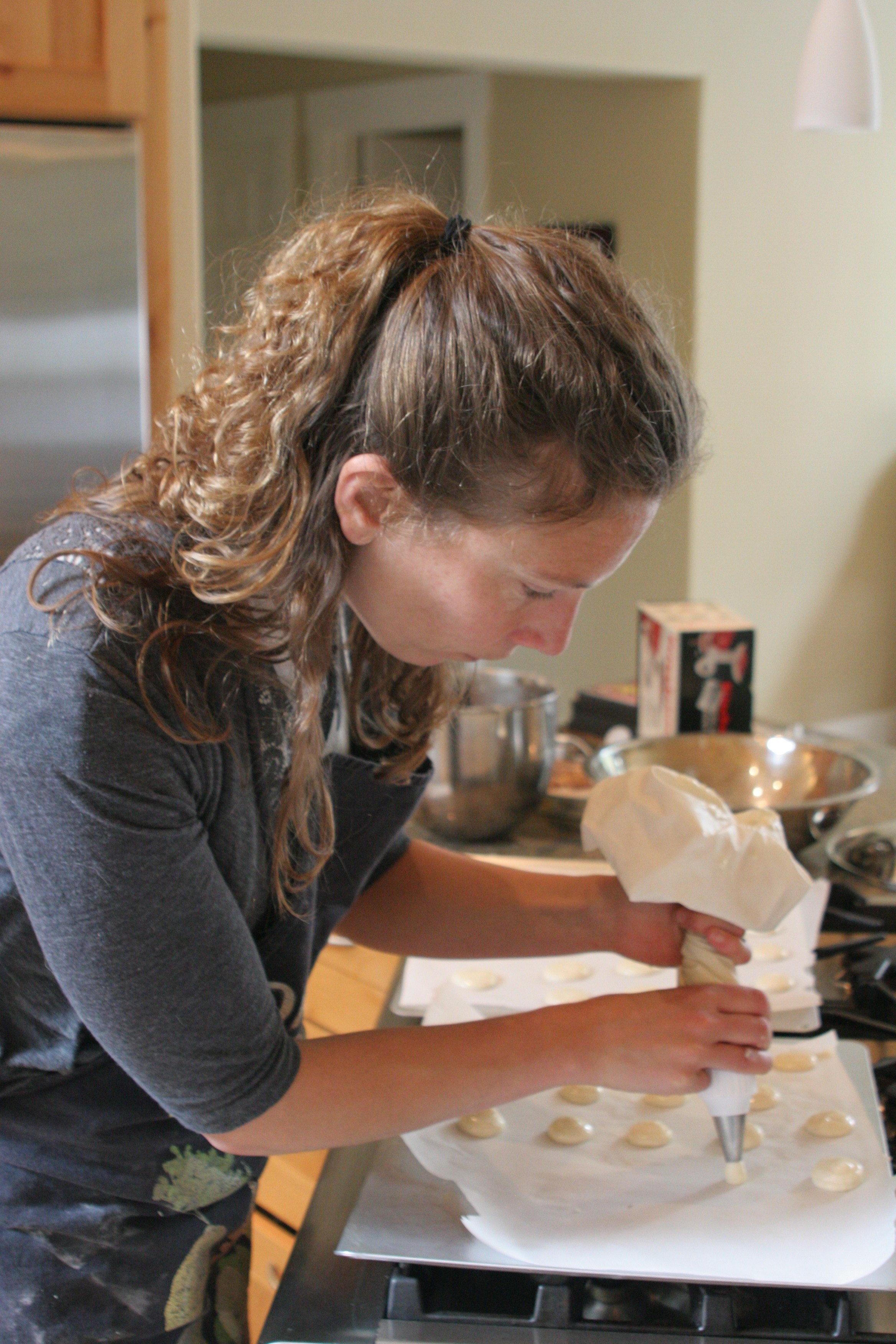
Piping the macarons

Finally, while these are involved, they are ideal for a day when you don’t have time to make dessert. They are meant to finish in the fridge for a minimum of 24 hours (ideally 48 hrs) and be served from the fridge. I keep coming up with ideas for these guys so expect a lot more soon. And I may post my recipes for the other flavors later on too. There are many different types of fillings, simple jams, cream cheese, plain curd, meringue butter cream, etc.

Enjoy this very special treat.
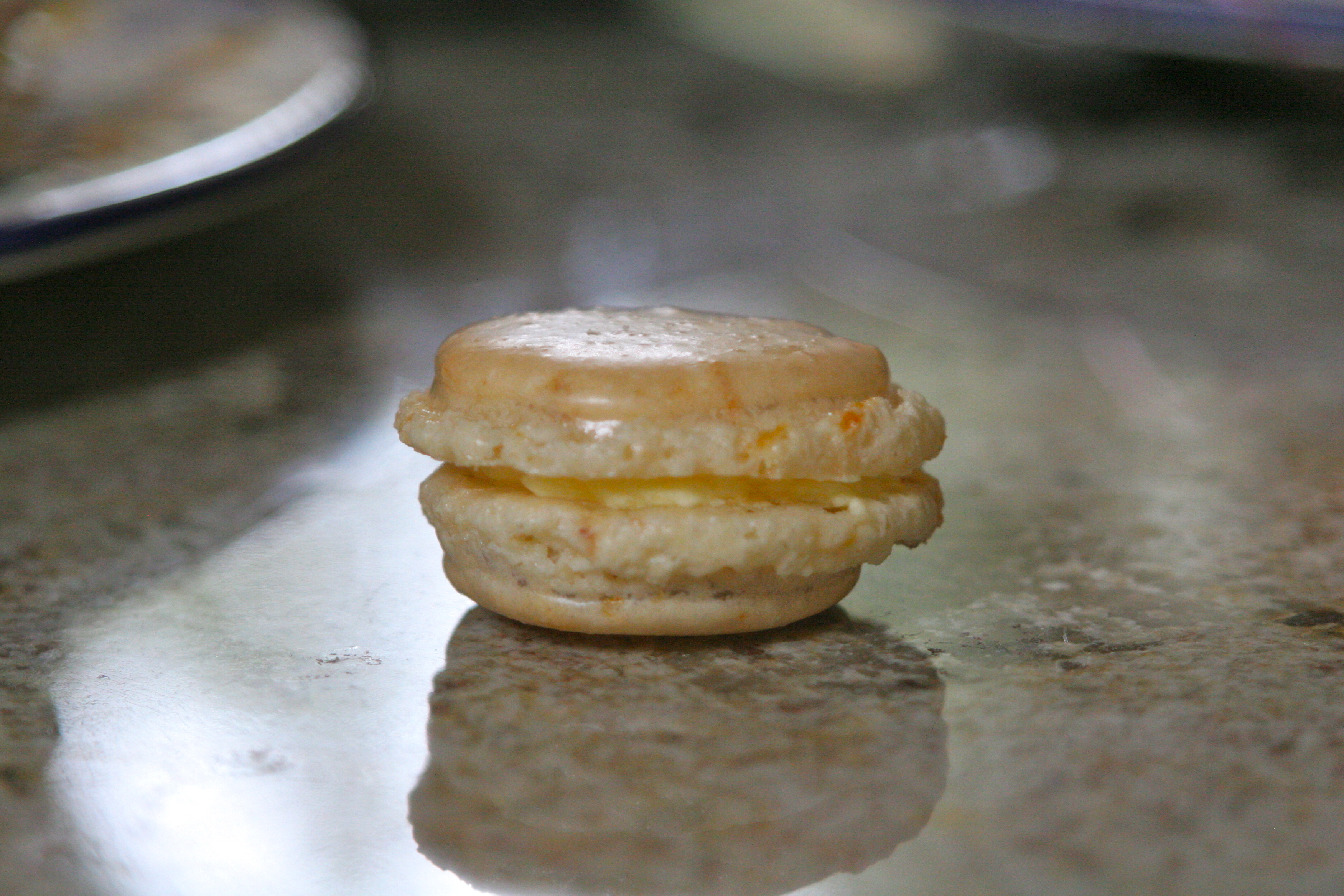
Grapefruit Macaron with Grapefruit Curd Custard Buttercream

Grapefruit Macarons with Grapefruit Curd Filling

Ingredients for the shells

90 grams egg whites (about 3), aged for at least 24 hours in the fridge

115 grams ground almonds, any kind (I used sliced, blanched this time)

210 grams powdered sugar

1/8 cup or 25 grams regular sugar

Zest of 1 grapefruit (I used Ruby Red) (reserve the inside for the curd)

1. In a Cuisenart, blend together the powdered sugar and almonds until they are a fine powder. As I noted above, I actually slightly overmeasure the powdered sugar and almonds to account for the little bits left in the sifter that I cannot pulverize. I snack on them while I bake. You should end up with a mixture that ends up weighing close to 310 grams.

2. Zest the one grapefruit directly into this powdered sugar-almond powder mixture.

3. In a Kitchen Aid type standing mixer, whisk the egg whites until they have risen and are foamy. Slowly add the regular sugar until they gain a glossy appearance.

4. Line two cookie sheets with parchment paper then macronage time. Carefully pour the powdered sugar-almond-zest mixture into the egg whites and with a swift hand, incorporate everything in between 40 to 50 strokes. As noted above, they should resemble lava, which of course, everyone has seen before, right?

5. Line two cookie sheets with parchment paper. In either a plastic bag with the tip cut off of one corner or a pastry bag with an Ateco tip #809 or #807, carefully scrape in all of the batter. Pipe little 1 to 1 1/2 inch circles with a good distance between them so they do not stick together. Give a few raps underneath the sheet to get rid of bubbles and make the “foot” of the cookie (you won’t notice it until it has baked) and let rest in a dry place for at least half an hour. Preheat the oven to 270 F.

6. Bake the cookies in the preheated oven for 18-20 minutes depending on their size. You do not want the tops to darken in color at all, but you want the cookie to cook enough that the outside is crisp while the inside remains chewy. Overbaking is preferable to underbaking in this case, but you won’t really know until they have cooled completely. Do not try to remove from the parchment until they are completely cool. Match shells according to size and then fill with whatever you choose and refrigerate for at least 1 day or until you just cannot wait any longer. Eat all the messy ones immediately.


Grapefruit Curd

Ingredients:

Juice of 2 small or 1 large juicy grapefruit

Zest of 1 grapefruit

Juice of 1 small Meyer lemon

1/2 cup (1 stick) of butter, cut into pieces

1 cup of sugar

2 large eggs

1 egg yolk

1. Sterilize some jars in boiling water for 10 minutes (start cold and heat up).

2. Mix the grapefruit zest, grapefruit juice, lemon juice, butter, and sugar in a heatproof bowl over a saucepan of simmering water until the butter has just melted.

3. Meanwhile, whisk the 2 eggs and the yolk together and pour through a fine-meshed sieve into the bowl with the grapefruit mixture and whisk constantly, until it thickens (about 8 minutes). It should have the consistency of cold cream. Pour into your dried, sterilized jars and let cool.


Custard Butter Cream with Grapefruit Curd

3 egg yolks

1/2 cup sugar

1/4 cup water

1 1/2 sticks room temperature butter, cut into tablespoons.

1. Heat the sugar and water in a pan until it reaches  238 F.

2. Meanwhile, whisk the egg yolks in a mixer until they are pale yellow and fluffy.

3. With the mixer on medium speed, add the boiling syrup and whisky until completely cool.

4. Take out the whisk attachment and switch to paddle. Add the butter one tablespoon at a time until all is incorporated.

5. Add a couple of tablespoons of grapefruit curd, to taste and mix completely.

6. Fill your macarons and refrigerate them.

Posted in Almonds, Cookies, Dessert, Jams and Preserves, Recipes for Egg Whites, Recipes for Egg Yolks | Tagged , , , , , , , , | 7 Comments

Colomba di Pasqua–Italian Easter Dove Bread

Colomba di Pasqua

Natale con i tuoi, Pasqua con chi vuoi. “Christmas with your family and Easter with whomever,” goes the saying in Italian. Well, as I sit here typing this post, my house is absolutely quiet with everyone else napping and I am not feeling bad at all about my selfish afternoon snack, alone with my colomba di pasqua.

The colomba di pasqua, or “Easter dove” is classic Italian bread, usually purchased at a favorite bakery. To be perfectly honest, I am not a huge fan of the quintessential colomba recipe. It is usually a little too boozy for my taste in breads.

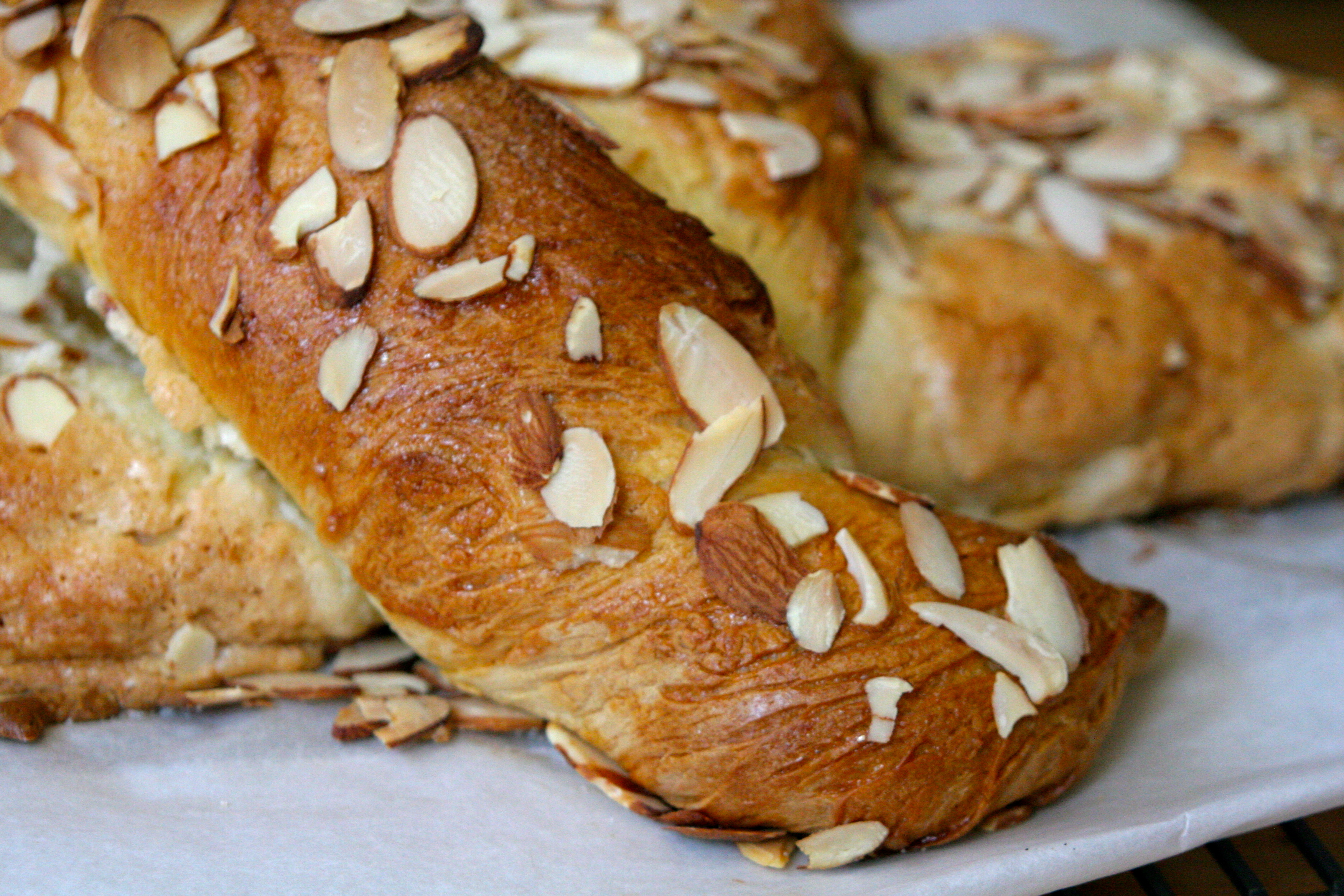
Topping on baked colomba

This colomba, on the other hand, is eggy and rich, much like brioche, with just enough Meyer lemon zest to heighten the almond flavors without becoming a citrusy bread. It is a perfect accompaniment to Easter brunch or dinner or you can serve it as dessert, if you choose to add the frangipane-like topping with sliced almonds.

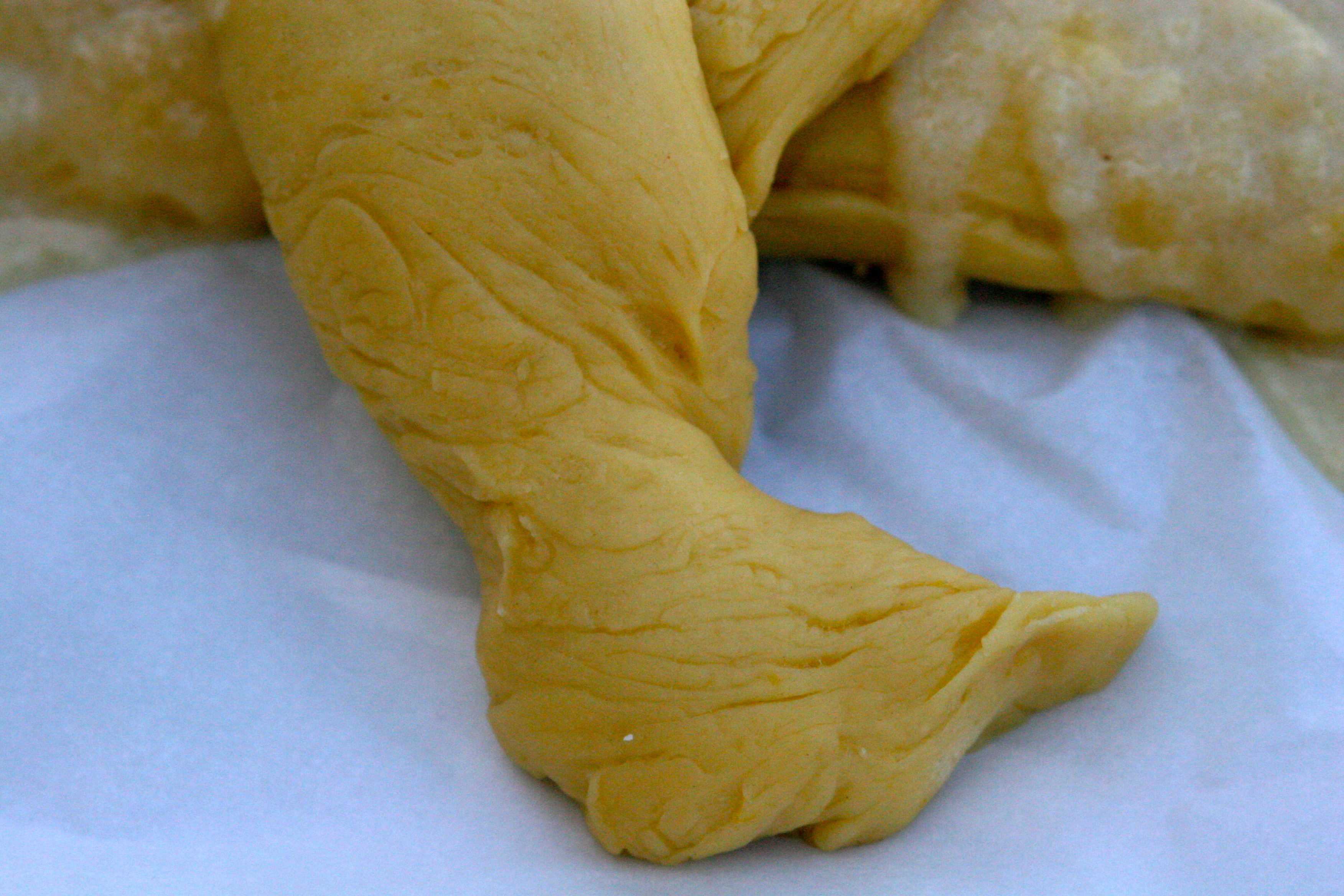
Just-shaped head of the dough

Like many breads, you can actually do everything the day before and let it wait in the fridge the night before so you do not have to craze about on the day you bake it. You mix it together in the mixer, let it do its first rise, shape the dough, and cover it with the egg white-almond paste and leave it in the fridge. About an hour and a half before you are ready to bake the bread, take it out, let it finish rising while the oven preheats, and cook it.

If you like to knead by hand, feel free. The dough is silky and has a beautiful texture that is a pleasure to knead. I do the final knead by hand before shaping the dough. Also, if you want the bread to be a little less sweet, you can skip the almond paste mixture and simply glaze it with egg white, sugar, and the almonds.

So go spend Easter with whomever you please and bring this bread (or pull off warm pieces just for yourself). I’ll be thinking of my newborn sweet niece who, though I will not see this weekend, I am anxious to meet in a couple of weeks. Happy Easter and Passover folks!

Fully baked colomba--head shot

Colomba di Pasqua–Italian Easter Dove Bread

Ingredients:

1 1/2  teaspoons active dry yeast

3 tablespoons warm water

1 teaspoon honey or 1/2 teaspoon brown sugar

3/4 cup milk

1/2 cup (1 stick) butter straight from the fridge

1/2 cup sugar or honey

1 tablespoon freshly grated Meyer lemon zest (or whichever citrus you prefer)

2 1/2 teaspoons vanilla extract

6 egg yolks

4 cups sifted all purpose unbleached flour, plus extra for kneading

1 1/2 teaspoon kosher salt

Optional Almond Paste Topping

1/3 cup almond paste

1 egg white

Almond Garnish

1 egg white

1/4 cup sugar

1/4 cup sliced almonds

1. In bowl of standing mixer (such as a Kitchen Aid) mix together the 3 tablespoons warm water, brown sugar or honey, and the yeast. Let foam up for a couple of minutes while you continue.

2. Head milk until it just begins to boil. Remove from heat and add the butter, lemon zest, sugar (or honey), and vanilla extract, stirring until the butter is completely melted. When lukewarm (not hot or it will kill the yeast!!), pour into the yeast mixture in the bowl of the mixer along with the 6 egg yolks and 1 1/2 teaspoons salt and mix on low with dough hook.

3. Add 4 cups of flour, keeping low-speed. Once all the dough is moistened, turn the speed to medium (about 6 on the Kitchen Aid) until silky and smooth (about 6 minutes). Let it “knead” for at least three minutes past the point where all the dough pulls away from the bowl. If the dough does not pull away from the bowl, add flour, 1 tablespoon at a time until it pulls away and becomes a ball.

4. While kneading in the mixer, grease a large mixing bowl with a stick of butter, PAM spray, Baker’s wonder, etc. When the dough is silky and smooth, put the ball of dough into the greased bowl, cover with plastic wrap and set in a warm place (I like my oven because it has a high pilot light) for about 2 hours, or until it is fully proofed and about double its size. (You’ll know because when you make a hole with your finger, it will not fill back in.) If you cannot remember the size, just put a bit of tape on the outside of the bowl so you can see when it has doubled in size.)

5. On a lightly floured, smooth surface, punch down the dough and knead until smooth (you can also do in the mixer if you are short on time, about 3 minutes or 5 minutes by hand). Separate into two equal sized portions and shape into a dove.

6. Cover a large baking sheet (minimum 13 x 15 inches) with parchment or butter it well. With a rolling-pin, roll out one piece of dough (the wings) into an oval, about 5×10 or 5×11 inches. Lay this on the parchment-lined sheet. Take the other piece of dough and roll out to a triangle with a 5 inch base and two 12 inch long sides. Place this on top of the wings, like a cross. The 5 inch base is the tail. Take the long top and twist it once. This will be the body. Pinch about 2 or 3 inches from the top to make the neck. Then, at the very top of the head, pinch ad shape it so that your dove has a beak. With an old school razor or a very quick sharp knife, score the tail and wings so it looks like feathers.

7. If using the almond paste mixture, whisk the 1/3 cup almond paste and 1 white together and spread on the wings and tail. Cover loosely with plastic wrap and let rise to almost double (but not quite) or put in the fridge overnight. Take out of the fridge about 2 hours before you want to bake it.

8. Preheat the oven to 325 F degrees. Once risen, brush the whole dove with the last egg white and sprinkle with the remaining sugar and almonds. Bake for about 40-50 minutes or until a toothpick/skewer comes out clean. Let rest on a baking rack and serve warm or room temperature. Leftovers make crazy delicious toast.

Posted in Almonds, Breads, Dessert, Recipes for Egg Yolks | Tagged , , , , , | 1 Comment

Pasta al Sole- “Sun Pasta” with sun-dried tomatoes, orange zest, fennel seed, and breadcrumbs

Pasta with homemade sun-dried tomatoes, orange zest, breadcrumbs, fennel, and fresh oregano

Spring is here, but it seems like it is coming at us two steps forward and one step back. Last week the thermometer climbed back to a temperature that my garden seemed to love and then the clouds and fog rolled in. Today it is raining, but I do not mind because I’ve got pasta al sole to warm me up. This is a pasta recipe from my Piemontese relatives (although no doubt southern Italian in origin), that makes me smile this time of year. It is a pasta that harnesses the sunshine so it is ready whenever you need it.

Organic orange, homemade sun dried tomatoes, oregano, garlic, fennel seed, and breadcrumbs

While my relatives never overtly linked the oranges of this recipe to the those thrown in the Carnevale d’Ivrea, I nonetheless think of the crazy, medieval, pre-lenten, annual festival that takes place in Ivrea. You can read more about it here, but imagine riotous, happy people dressed as uprising peasants with red caps, pelting “the man” (i.e. re-enactments of an evil duke and his minions) with rock hard Sicilian oranges that are shipped north by the trainload each year.

Pure joy.

I remember spending a wonderful week with my Eporediese family, reveling in the traditions, enjoying the “fagiolata” (a communal bean-stew-eating day), and massaging my poor bruised body, still fragrant with orange pulp. I hope you too might be able to visit this amazing place one day, should you ever visit Italy.

Thinly sliced orange zest

In some ways, April is one of the bleakest months of the year for produce at the markets. Winter vegetables and fruit are just coming to an end and it is way too early for spring gems like local organic strawberries. This pasta uses the last of your market’s citrus (clementines, blood oranges, minneolas–anything in the mandarin, tangerine, or orange family is fine) and what you bottled from summer (if you make homemade sun-dried tomatoes like me) so in a way, it is an utterly seasonal April pasta dish. (Having said that, my favorite way to make this dish actually includes zucchini which is not in season right now, but you can adapt it and add julienned zucchini as soon as the first young vegetables show up).

Another unique touch in this pasta, which incidentally completes a perfect vegan pasta, is the poor man’s cheese. “Formaggio dei poveri” is simply oil toasted bread crumbs with whatever flavoring you choose to add. I like a tiny bit of crushed garlic and some fresh oregano. It tastes like crunchy crushed garlic bread.

"Poor mans cheese" Formaggio dei poveri

This is a great pasta to serve at Easter brunch or dinner since it tastes great piping hot or room-temperature. As with my other posts, I recommend toasting your seed spices, here fennel seed, ahead of time and then crushing it in a mortar and pestal before adding it to your olive oil.

If you have homemade or special sun-dried tomatoes, I recommend using them in this dish. They are nothing like those pre-sliced sun-dried tomatoes that were paired with pesto (ugh) of the 80s and 90s. (Sorry folks, I seem to have a vendetta for dishes with pesto and sun-dried tomatoes.) I plan on doing a post on how to do your own sun-dried tomatoes in the August or September when I come across more of Mariquita’s amazing Early Girls and San Marzano tomatoes.

Finally, your orange should be organic simply for the fact that you will be eating the peel in your dish. Make sure it is free of wax and pesticides.

Look out tomorrow for a classic Italian Easter bread covered with almond paste and sliced almonds.

Detail of pasta garnishes

Pasta al sole–Sun Pasta

Ingredients:

1 package of any kind of pasta (preferably long like tagliatelle, spaghetti, etc.)

3/4 cup sun-dried tomatoes, drained a bit and cut in strips (I just cut them with kitchen shears)

2 tablespoons olive oil

5 cloves garlic, 1 set aside

1 organic orange or 2 smaller tangerines

3/4 teaspoon fennel seed (anise in a pinch is fine)

3 small or 2 medium zucchini (optional if in season) julienned (cut into match sticks)

1 tablespoon fresh oregano

1/2-3/4 cup bread crumbs or panko

1. Boil the water for your pasta.

2. With a vegetable peeler carefully peel strips of your orange without removing the white of the orange. Stack the fat strips on top of each other and then, with a sharp knife, cut long, tiny strips at an angle so they are about 1-2 inches long each.

3. In a frying pan heat to medium low. Add the fennel seed until it just barely changes color and smells fragrant. Pour out hot seed into a mortar and pestal or a cutting board where you can crush them with the back of a sturdy cup.

4. Add olive oil to frying pan at medium low. Mince 4 cloves of garlic and fry for a minute. Add the sliced orange zest, crushed fennel seed, (juliened zucchini if using here), and then the strips of sun-dried tomatoes, taking care not to add too much extra oil from their jar. Turn heat to low.

5. Cook your pasta. While it is cooking heat a separate pan on medium. Add the final clove of garlic, crushed this time, for 30 seconds. Add the bread crumbs/panko and cook for 3 minutes or until crispy. Add the fresh shopped oregano and cook another minute. Pour out the “poor man’s cheese” into a bowl to stop the cooking.

6. Drain your pasta, toss into the sauce in the frying pan. After you have served each person, pass the bread crumbs around for people to add, and if you must overdo it, as I clearly must, add Pecorino Romano or Parmigiano as well.

Posted in Pasta, Vegan | Tagged , , , , | 4 Comments

Rosewater Pistachio Meringues

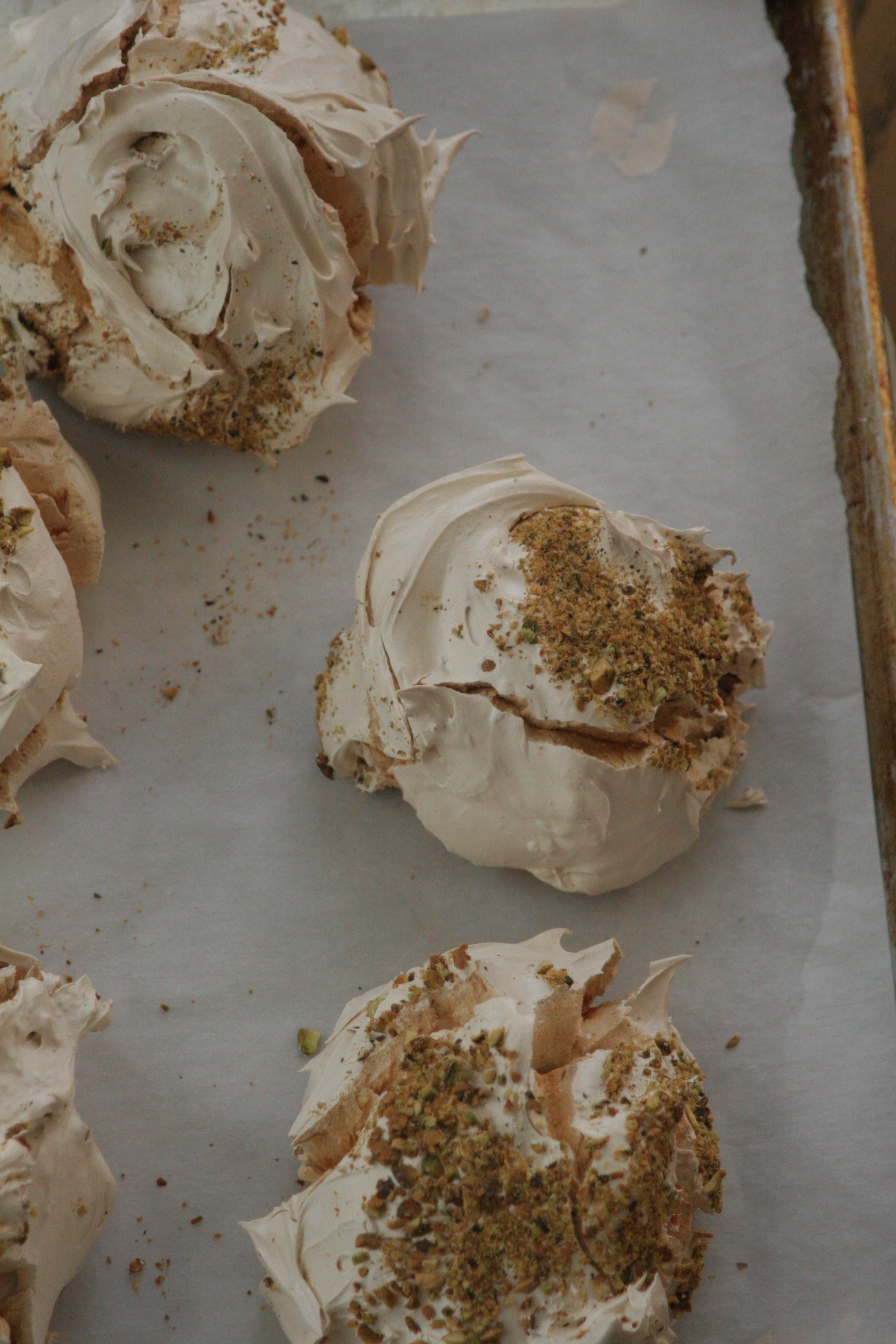
Finished Rosewater-Pistachio Meringue with gorgeous cracks

I realized that I compulsively entered the kitchen twice fumbling around for another bite, or just crumbs even of my rosewater pistachio meringues. No luck. Someone finished them. It was my kids…..my husband……er, me. I have now reached the desperate and frantic, “There-are-no-cookies-in-the-house” stage, which is a dangerous place to be. There is usually at least one container of some sort of frozen or refrigerated homemade dough for these panic-stricken, frenzied moments. I guess, you know what I will be making again soon.

Left side of cooked tray

I really love cookies with egg-whites. To be categorical about it, I guess I love meringues, but I must include macarons too, which are not really true meringues. Every Christmas, my Sicilian great-grandmother made meringue cookies that she called Mistletoe Kisses with little chocolate chips and corn flakes. I still make them every year (even outside of the holidays), but I have changed them quite a bit based on my experience making many other types of meringues.

The most basic meringue cookie consists only of sugar and egg whites, but how one combines those ingredients varies a lot. You can make a sugar syrup and pour it onto the whisking egg whites (Italian). You can heat the egg whites with the sugar until it is hot to the touch and then whisk it (Swiss). You can just whisk egg whites and add a pinch of salt and/or cream of tartar and/or cornstarch. Or you can try my new favorite way.

Baked sugar, bubbling at the edges

You heat up the sugar on a parchment covered cookie tray and then dump it into your whisking egg whites. I have never had glossier batter.

Meringues ready to bake

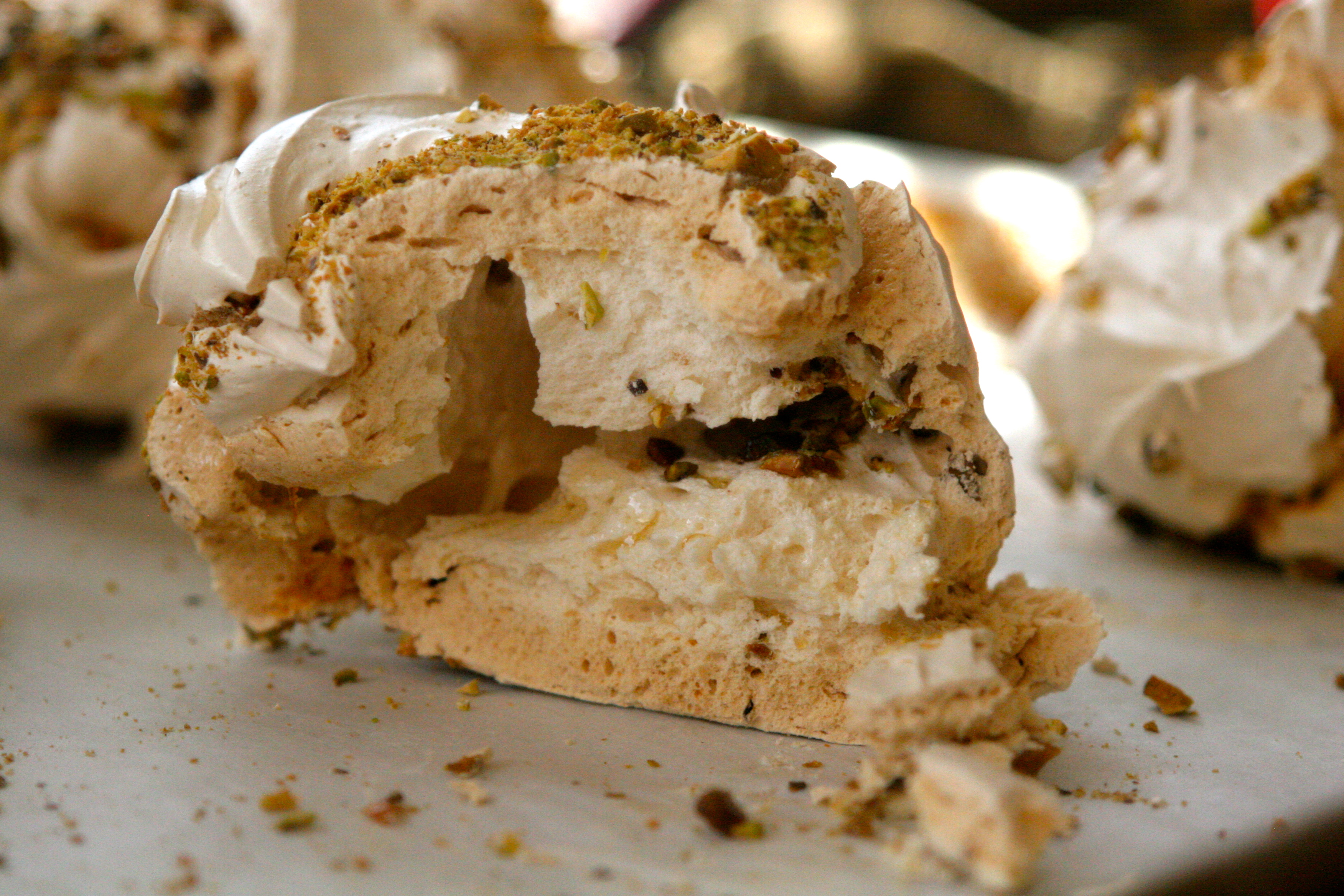
Furthermore, the textual difference between the shatteringly crunchy outside and marshmallowy soft interior was addictive (ahem, read above).

Shattered crumbs on the plate

As far as cookies go, these are actually pretty easy, especially since you make them gargantuan sized so do not have to spend much time shaping them. As a meringue cookie goes, they are actually pretty easy too since you can reuse the same pan you bake the sugar on (less dishes is always a good thing, right?).

Exposed soft inside of meringue

I have so many ideas for these meringues so I’ll share them with you since I know that some people aren’t into flower scents in their sweets. Make them my Nana’s style and fold in corn flakes and chocolate chunks. Chocolate and pistachio? Toasted almonds, rocher-style or hazelnuts and brown sugar. Mixed Meyer lemon, grapefruit, and lime zests. Matcha green tea with bits of popcorn folded in. Finally, one of my favorite desserts is meringues broken up into homemade vanilla ice cream with either fresh fruit or nuts. These would be great in that. (Or alternate bites with 85% dark chocolate. Mmmm). Let me know what you try, but whatever you do, make these soon!

Colossal meringue with a pretty little bubble of caramelized sugar

Rosewater-Pistachio Meringue

(another winner adapted from Ottolenghi: The Cookbook)

(makes 5 colossal meringues)

Ingredients:

Caster (or regular) sugar 300 grams or about 1 1/3 cups

4 large egg whites or 150 grams

pinch salt

1 teaspoon rosewater

30 grams minced pistachios (a handful, this is really up to you)

1. Preheat oven to about 400F degrees. Evenly spread the sugar on a parchment-lined baking tray and put in the oven for about 8 minutes or until the edges just begin to dissolve at the edges.

2.While the sugar is in the oven, whisk the egg whites in a standing mixer on high-speed until they begin to froth up add the pinch of salt.

3. With the mixer on medium speed, add the hot sugar carefully and slowly, then the rosewater. Turn to high-speed and mix for another 10 minutes or until cool.

4. Lower oven temperature to 225 F degrees and place finely chopped pistachio nuts on a plate.

5. Line a baking sheet (the one you just used for the sugar is fine) with parchment and dab just a tiny bit of the meringue batter under each of the four corners to secure it. With two gargantuan kitchen spoons mold a grapefruit-sized dollop of meringue, roll it onto your plate of pistachio nuts, and place on the parchment. Repeat, making room between meringues since they will expand and crack a bit as they cook. They should each look different and very free-formed.

6. Cook in preheated oven (225F) for about 2 hours, turning the front to back every half hour. The outside should be utterly dry, while the inside marshmallow soft. Cool and eat. Cover leftovers in an airtight container or plastic bag.


Posted in Cookies, Nuts, Pistachios, Recipes for Egg Whites | Tagged , , | 3 Comments

Cumin-Cauliflower Fritters with Lime Yogurt Sauce

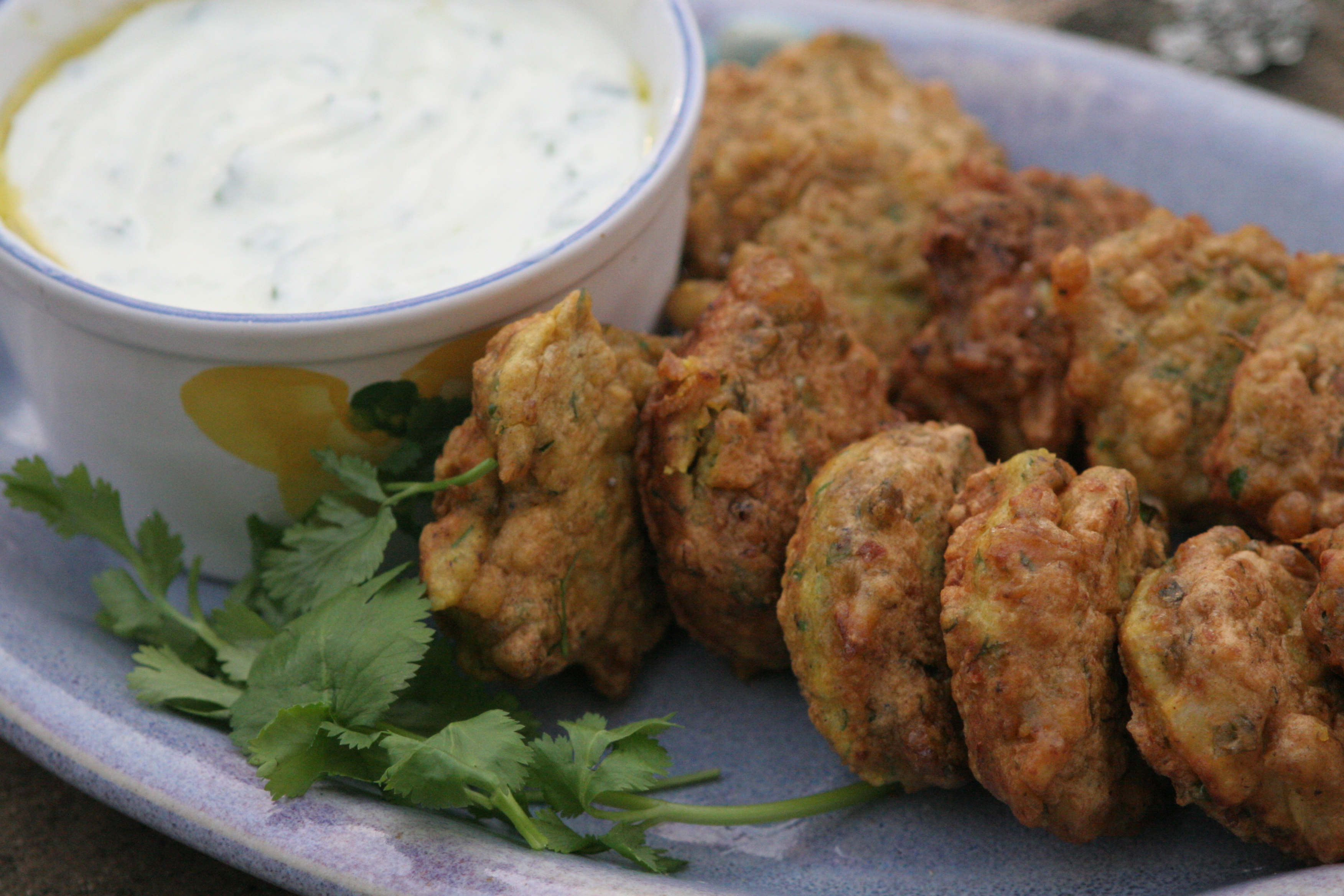
Disappearing Cauliflower Fritter dipped in Yogurt-Lime Sauce

One of my favorite cookbooks is Ottolenghi: The Cookbook. The photos are gorgeous and artsy, depicting what seems like just my type of place. Big plates piled high with colorful salads and vegetables, a variety of beautiful meat dishes, and pastries and cookies (with lots of nuts) teasing you from a big glass storefront window. However, what I like best about the photography is how it unites the people and the food, exactly how Italian-Israeli Yotam Ottolenghi and Palestinian Sami Tamimi describe their food. Every recipe relates to people in their lives, whether the various recipe-creaters at Ottolenghi itself or their family members (incidentally mostly women) who inspired the Middle Eastern bent that permeates their creations.

In the background of a shot focused upon the pastry plates, you see a mother making her baby giggle in a stroller as they both enjoy a snack and a warm drink out on the sidewalk table. Kids, dogs, mothers, lovers. Had I not read the stories of Ottolenghi and Tamimi, who came together in London after growing up on opposite sides of the Jerusalem, the message was still clear; great food is what brings people together to enjoy the beautiful mundanities of life.

I’ve never been to Ottolenghi, but I am certain that if (when!) I visit London again I will be unable to walk down the street without making a serious food detour into their store. The first thing I will order will be their Cauliflower and Cumin Fritters with Lime Yogurt.

Turmeric, cilantro, shallots, cumin, cinnamon, salt, and flour

I have made many recipes from their book and the Cauliflower Fritter Recipe is a game-ender. Whenever I make them, people cannot guess their ingredients. They have a mysterious, Middle-Eastern spice mix that most people never try out with cauliflower.

Spaced fritters frying away

I always have these spice on hand, and I grow parsley and cilantro in my garden so I am usually set for the seasoning. I almost always have yogurt in the house because our house goes through at least a quart a week. Eggs, flour, shallots? Great.

All you really need to do is pre-cook the cauliflower florets in salted water and drain them. (As I have mentioned elsewhere, don’t forget to use the tasty stem too.) As they cool, you simply whisk everything else together. Add the cauliflower and mash it up a little bit with the whisk. One of my tricks with these is that I prefer to make them much smaller than the recipe recommends. I actually use a tiny little cookie scooper to get uniformity in size and drop the balls of batter into the oil really quickly. My favorite falafel place in San Francisco does something similar at a breakneck speed so I tried it the first time I made these. It makes your work clean(er) and fast.

Whatever you do, please eat these with people you love and enjoy the special simple things in life.

Cauliflower Fritters with Lime-Yogurt Dressing

Cauliflower Fritters with Lime-Yogurt Sauce

(Adapted from Ottolenghi: The Cookbook by Yotam Ottolenghi and Sami Tamimi)

Ingredients:

1 small Cauliflower (or half a large one), about 320 grams or 1 cup, chopped into tiny florets (cube the stems to about the same size)

Flour 120 grams or 3/4 cup

2 shallots, minced

1 garlic clove, crushed

1 teaspoons cinnamon

1/2 teaspoon turmeric

1 1/2 teaspoon toasted and ground cumin

3 tablespoons minced parsley

4 eggs

1 1/2 teaspoon salt

1 teaspoon pepper

Yogurt Lime Sauce

Yogurt 150 grams or 3/4 cup

1 tablespoon olive oil

Zest of one small lime

1 tablespoon fresh squeezed lime juice

1 tablespoon chopped cilantro

1 tiny clove of garlic crushed

salt to taste

1.Make the Yogurt-Lime Sauce. Whisk all the sauce ingredients together.

2. Boil salted water and add cauliflower. Cook about 8 minutes or until it is very soft. Drain and set aside to cool a little bit.

3. Heat frying oil of choice in a high-heat frying pan (I use cast iron for this) to medium or medium low. I fill it up about 1/2 inch to 3/4 inch up the sides of the pan.

3. Mix everything except the eggs and cauliflower. Whisk in the eggs and then whisk in the cauliflower.

4. With a tablespoon or a small cookie scooper, gently drop balls of the batter into the hot oil, taking care not to overcrowd them.

5. After about 3 or 4 minutes, flip them carefully with a fork to cook on the other side. They should be cooked through with no raw ingredients.

6. Serve immediately with the yogurt sauce or, as Sami suggests, on a picnic in pita with hummus and tomato.

Posted in Cauliflower, Dinner, Lunch | Tagged , , , | 11 Comments

How to Build a Better Salad: Spring Beet, Carrot, Radish Salad with Spicy Lettuce and Parmigiano

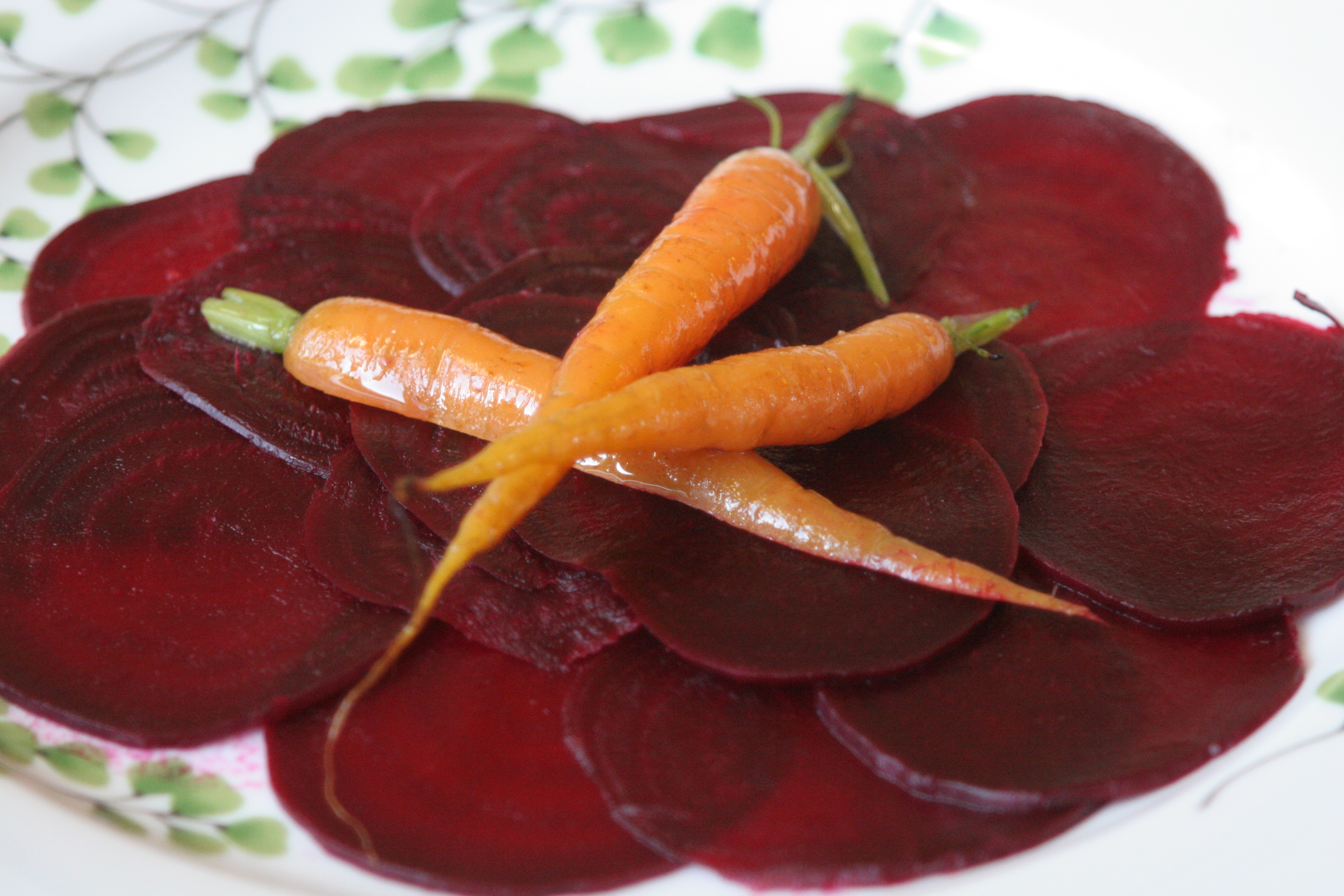
Bed of Thinly Sliced Roasted Beets and Real Baby Carrots

I am a sucker for a great salad. If I go out to eat, I tell myself not to order salad because– just like pasta–I feel that I can make one that is equally delicious.

Then I end up ordering the salad.

Also, just like pasta, “salad” is so versatile that it can appear in infinite permutations. Salad with simply lettuce. Warm pumpkin and chickpea salad with no lettuce at all. Classic Greek salad with just perfect fresh ingredients, feta, oregano, and olive oil. Salad for dinner, lunch, and even fruit salad at breakfast. My husband thinks that I am insane for insisting upon a salad with pizza. “Why do you need to have a salad with this?!”

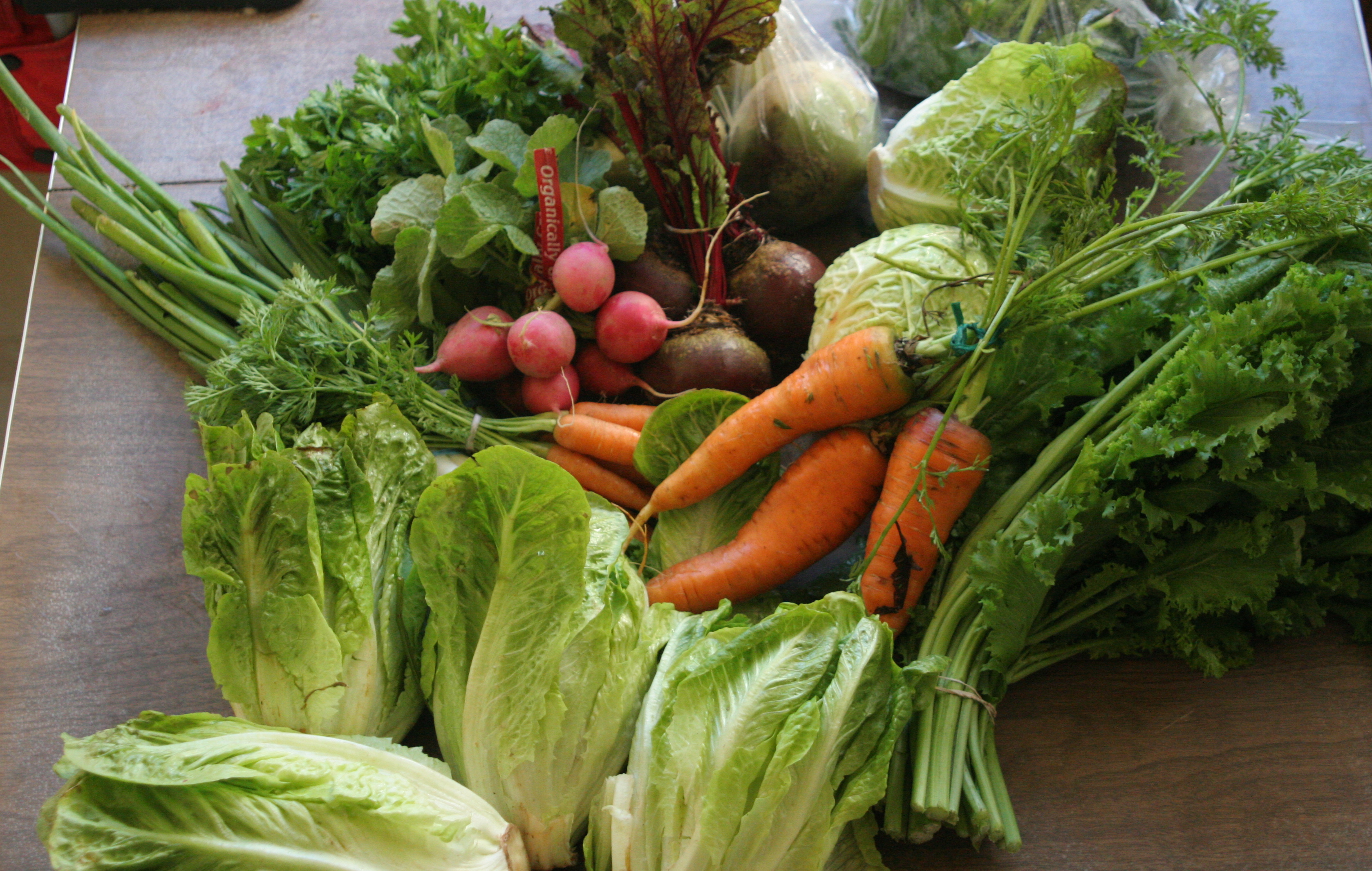
Vegetables from Last Weeks Mariquita "Mystery Box"

Because, a great salad is the perfect meal. Following this assertion, I think I can name this installment two of the Earnest-but-Inept-Cook series. Most of the earnest-but-inept cooks I know also fall under the following categories:

1. The reformed salad bar person who was under the distinct impression that a well-built salad consisted of pre-shredded carrots, croutons, and (real or fake) bacon bits.

2. The “I only eat one kind of lettuce” person who only refuses to eat anything but iceberg lettuce or spinach if your significant other has shoved it down your throat enough times for you to get used to it. You usually use store-bought dressings.

3. The “I only eat one salad and it’s a Caesar.” (Sorry, I too love a good Caesar salad, but really! You know who you are.)

This post, while not really needing a recipe, provides a guide to making a great salad that is filling, nourishing, balanced, and mouth-watering, yes mouth-watering.

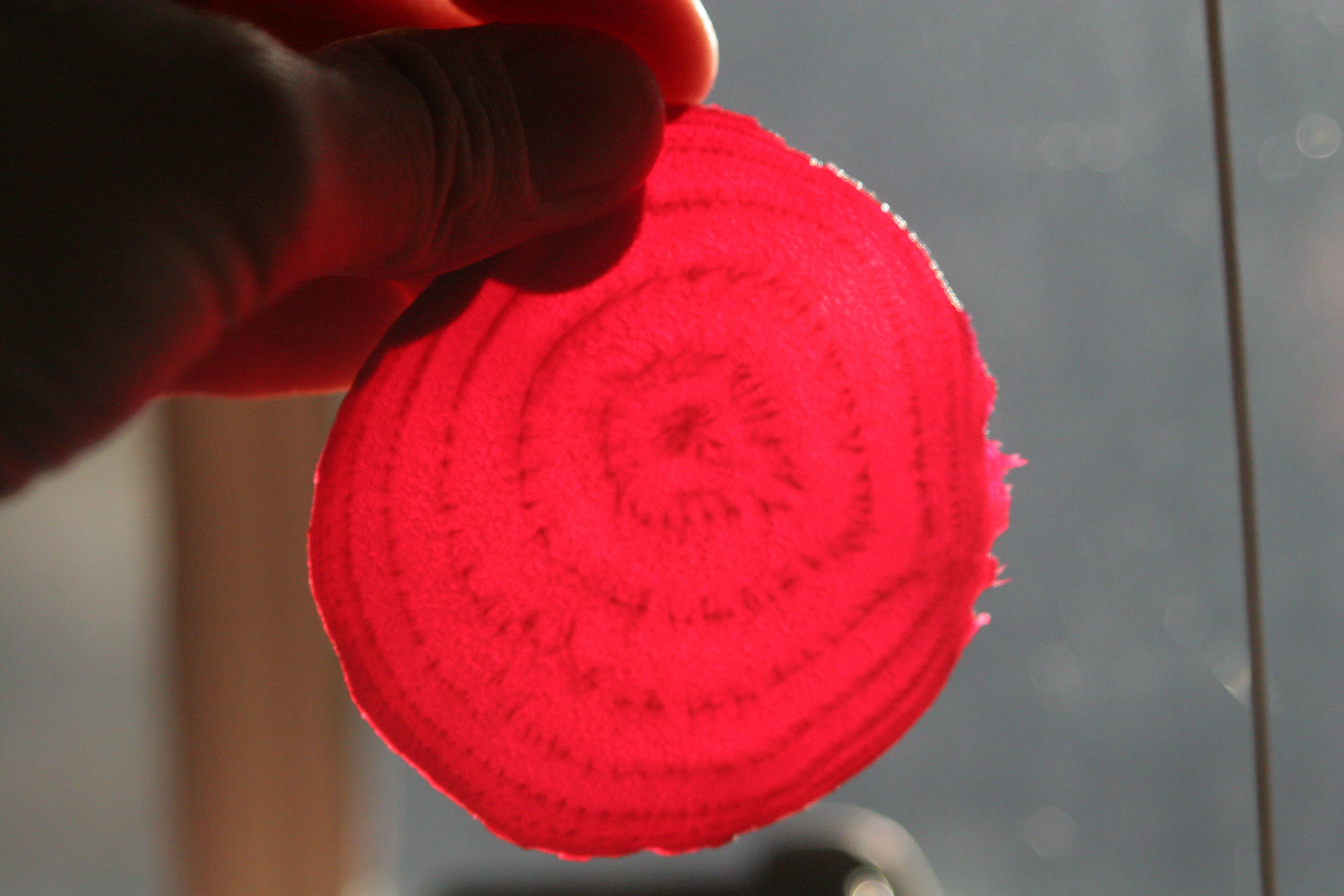
First, roast some beets, cool them, and then shave them paper-thin.

A paper-thin roasted beet slice held up against the sun.

Arrange the beets on a plate. This will be the bed of your salad.

If you already like beets you will love this method. They taste crazy delicious and their sweetness builds a crucial flavor for the salad. If you do not care for beets, think again. I am willing to bet that this method will win you over. Shaving the already roasted beet, changes the texture and presents a nuanced sweetness that is harder to taste were they shaved raw (which I personally love), or cooked and chopped. Think of a good aged cheese like Parmigiano. Most people do not eat massive chunks of this stuff, but instead shave it or grate it thinly. The change in surface area allows you to experience the best of the beet too.

Now, for the manly men out there, to further my case that a great salad can serve as your meal, you do have to get beyond just one type of lettuce and you need to let go of the fake bacon bits and dry, almost-hairy pre-grated carrots.

Try these instead please…

"Real" Baby Carrots from Mariquita Farm

“Real” baby carrots are almost certainly not available at your local supermarket. You need to fork out a little extra dough at Whole Foods, visit your local farmer’s market, or best of all, grow them yourself. When pulled up at this tiny stage, they are incredibly sweet, tender, and need nothing more than a good scrub. No peeling here. If you like your carrots cooked, give them a quick toss in your saute pan until they are just barely cooked. (“Al dente” as if it were pasta…although no Italian refers to vegetables as “al dente”.) My kids prefer them raw. Keep the tiny ones whole, just barely cutting off their stems, but rinsing any grit. Slice the slightly larger ones in half. Without overloading, lay them over each other like the spokes of a wheel on top of the bed of sliced beets.

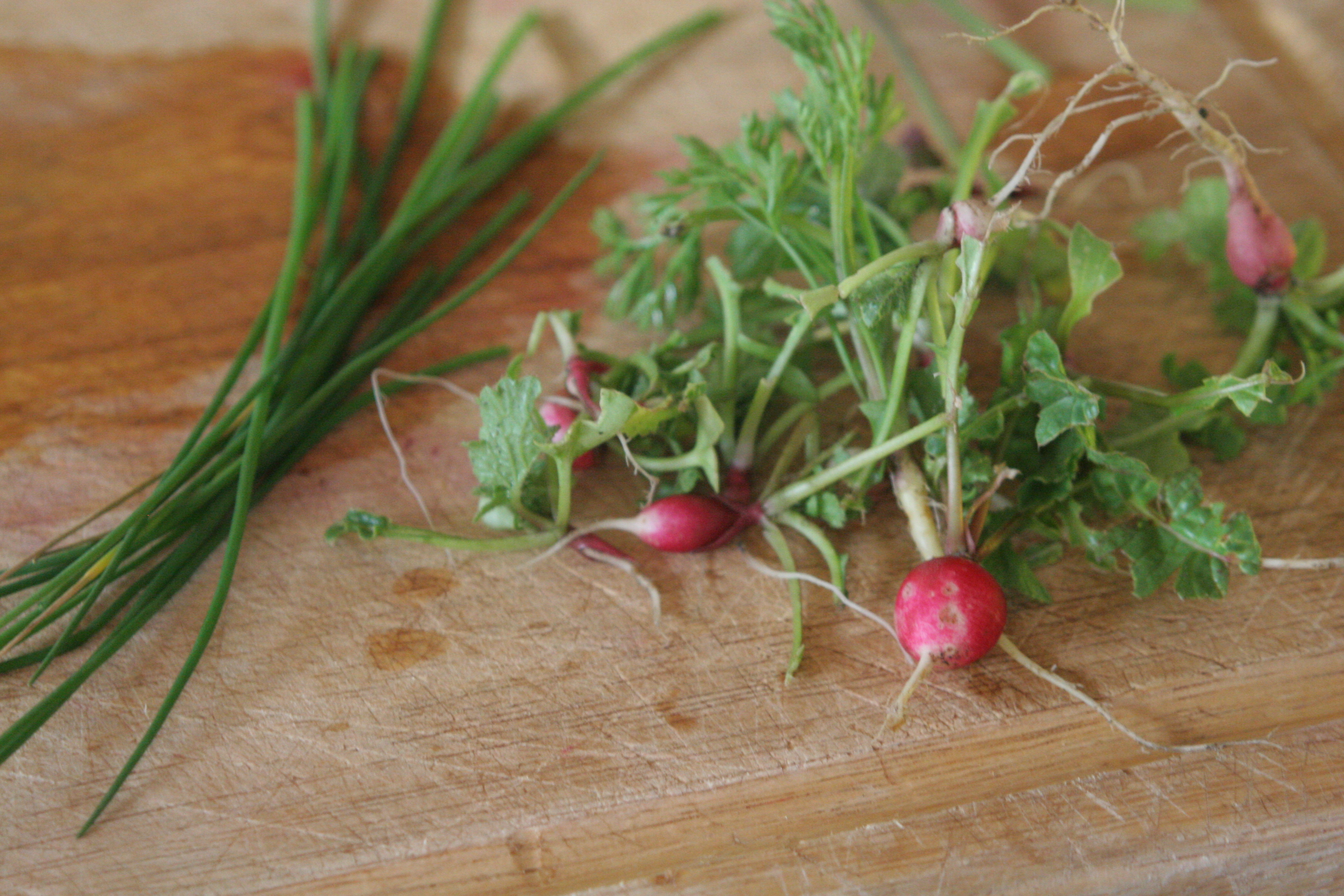
Next you can lay down your bed of lettuce. Since you have two earthy-sweet root vegetables, try to contrast those flavors. For example, while I adore butter lettuce, I think a spicy arugula, watercress, or peppercress would do best here. Intermix some of your top ingredients, which, in my case, are fresh, paper-thin radishes and snipped chives. You want to just layer a couple of each without overcrowding.

Chives and Tiny Radishes from Our Garden

At the very top of your salad place a couple of shaved radishes. Drizzle a generous amount of the very best olive oil you own, sprinkle some sea salt from about a foot above (to better disperse it), and finally shave a really good aged cheese, like Parmigiano.

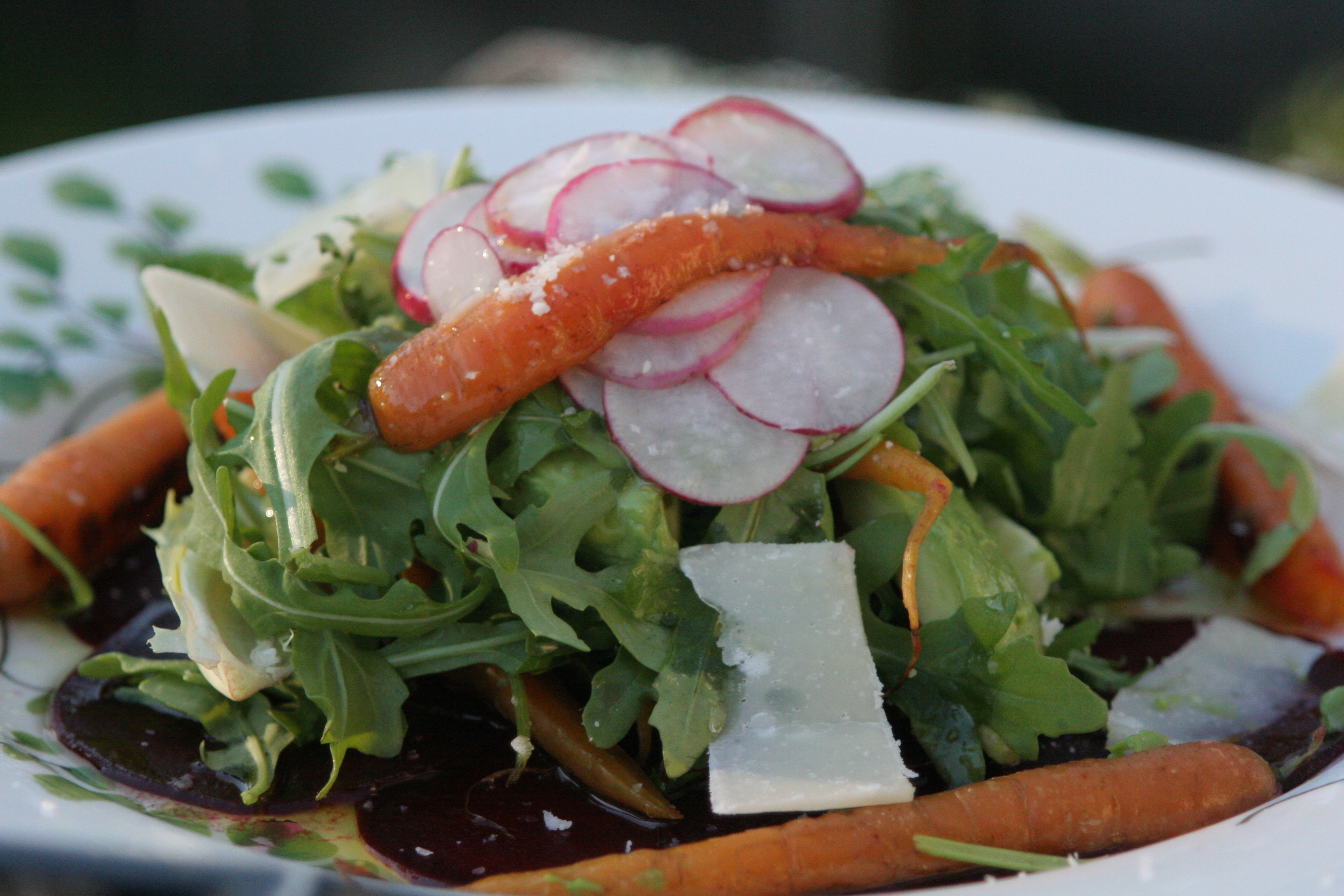
Spring salad with paper-thin beets, baby carrots, radishes, arugula, and shaved Parmigiano

I could offer copious notes on salad making, and will offer more when I post another salad, but I simply add the following. For crunch and protein, I suggest adding some nuts or seeds. I love pistachios, walnuts, and pumpkin seeds with this salad. If you simply must have a vinegary tang, you could do a fruity vinegar like this one, or just squeeze one of the phenomenal Meyer lemons that are in season right now. I love a good vinaigrette, but this salad has so much going on that I feel the simple rich olive oil and salt complete it.

The big take home points are that you should balance your sweet, salty, spicy, savory, and sour flavors in whatever combination that you like best. Add texture differences. Go beyond lettuce! This salad is also great with absolutely no greens at all.

What is your favorite salad recipe? If you fall in one of the tragic, above-mentioned salad categories please do report back. And, yes, I will do a salad with homemade croutons soon, I promise.

Spring Beet, Carrot, Radish salad with Spicy Lettuce and Parmigiano

(Serves 2 hungry people)

2 large or 3 medium beets, any color

bunch of baby carrots

arugula, watercress, or peppercress

radishes

8-12 chive leaves, minced with kitchen shears

1 1/2-2 tablespoons extra virgin olive oil

sea salt

shaved aged cheese like a Gouda, Pecorino, or Parmigiano

1. Roast the Beets. Chop off scraggly roots and the tops of the beets (don’t throw them away, they taste fantastic cooked). Wash them and wrap them in foil. Cook for about 40 minutes at 400 degrees Fahrenheit. Take out, let cool in the fridge. When ready, peel off the skin with your fingers.

2. With a very sharp knife or a mandoline, slice the beets paper-thin and arrange on your plate in overlapping circles.

3. Place your carrots (raw or slightly cooked) over the beets as indicated above.

4. Mandoline or cut paper-thin the radishes.

5. Layer your salad of choice with the chives and radishes, building up as you go.

6. Drizzle your best olive oil, sprinkle sea salt from above so it is evenly dispersed, and shave your cheese on to the top and around the sides with a potato peeler.

(See notes above for hints.)

Posted in Beets, Inept-but-Earnest Cook's Night, Salad | Tagged , , , , | 12 Comments

Vegan Pumpkin, Farro, and White Bean Soup

Vegan Pumpkin, White Bean, and Farro Soup with Fried Shallots and Cilantro

After record rainfall this year, we had a teaser of spring last week. We wore shorts and skirts over here in San Francisco. We had a couple of picnic lunches in soft spring sunshine. We took a lot of long walks (well, we do that in the pouring rain too because of the crazy German Shepherd mix). We ate ice cream at two of my favorite spots.

Well the temperatures have fallen again and it’s cold and wet. Perfect for soup.

This soup is Moroccan-inspired in the pumpkin, spicing, and garnish, but also contains Italian beans and farro. It’s quick, hearty enough to serve as dinner, and rich in umami flavors from the tomato and fried shallots. Be sure not to skimp in the spices as they round out the flavors of otherwise quite simple ingredients.

Shallots, Butternut Squash, and Parsley from Mariquita Farm

The most important part of the soup is the garnish. If you have ever made Indian daals, many of them rely on spices and/or garlic fried in ghee and then spooned into each bowl of soup. Many Northern African stews and soups are similar. For this soup, you add sliced shallots, toasted ground cumin, and chopped parsley and mint to hot olive oil until the shallots become crispy and the spices fragrant. Spoon a large helping into each bowl and add some fresh cilantro sprigs and you have an interim soup to get you from a prolonged winter to tardy spring.

Vegan Pumpkin, Farro, and White Bean Soup

Ingredients:

1 can tiny white beans (or about 3/4 cup dry, soaked overnight and cooked, saving a bit of the cooking liquid)

6 tablespoons olive oil, divided

1 large onion, chopped

5 cloves of garlic, minced

1 cup farro

1-2 tablespoons tomato paste or half a can of chopped tomatoes

6 cups water or broth

1/2 Butternut squash or small (1-2 lb) Sugar Pie pumpkin, Kabocha, Delicata, Rugosa, etc., peeled and cut into 1/2 inch cubes

1 teaspoon ground allspice

1/8-1/4 teaspoon of cinnamon

2 teaspoons ground cumin, divided (I like to toast whole cumin seeds and grind them myself)

salt to taste

2 tablespoons minced parsley and/or mint

2 large shallots, sliced

1 teaspoon cayenne pepper or tiny dried whole chili peppers (optional)

cilantro sprigs to taste

1. Heat 3 tablespoons olive oil to medium and add onions and garlic. Fry for about 10 minutes, stirring occasionally.

2. Add farro and stir to coat. Add the tomato paste or tomatoes and cook for 1 minute. Add approximately 6 cups of water (or broth) and stir to cook for 30 minutes.

3. Add chopped pumpkin/squash and beans, allspice, cinnamon, and 1 teaspoon of the cumin to cook for another 15 minutes or until pumpkin is cooked to the texture you prefer. (I like firm enough that it is not falling apart, but still has individual pieces.) Add salt to taste.

4. Heat the remaining 3 tablespoons olive oil to medium-high. Add all the sliced shallots and cook until they begin to color. (I sometimes separate the rings with a fork, being careful not to burn myself in the hot oil, it allows them to get perfectly crispy.) Add the last teaspoon of ground cumin, the parsley and/or mint, and the cayenne pepper, if using. Fry for another minute and then remove the pan from heat.

5. Taste your soup to check the saltiness and then ladle into bowls, top with a very generous spoonful of the shallot-spice garnish, several sprigs of fresh cilantro, and serve.

Posted in Legumes, Soup, Vegan, Whole Grains | Tagged , , | 4 Comments

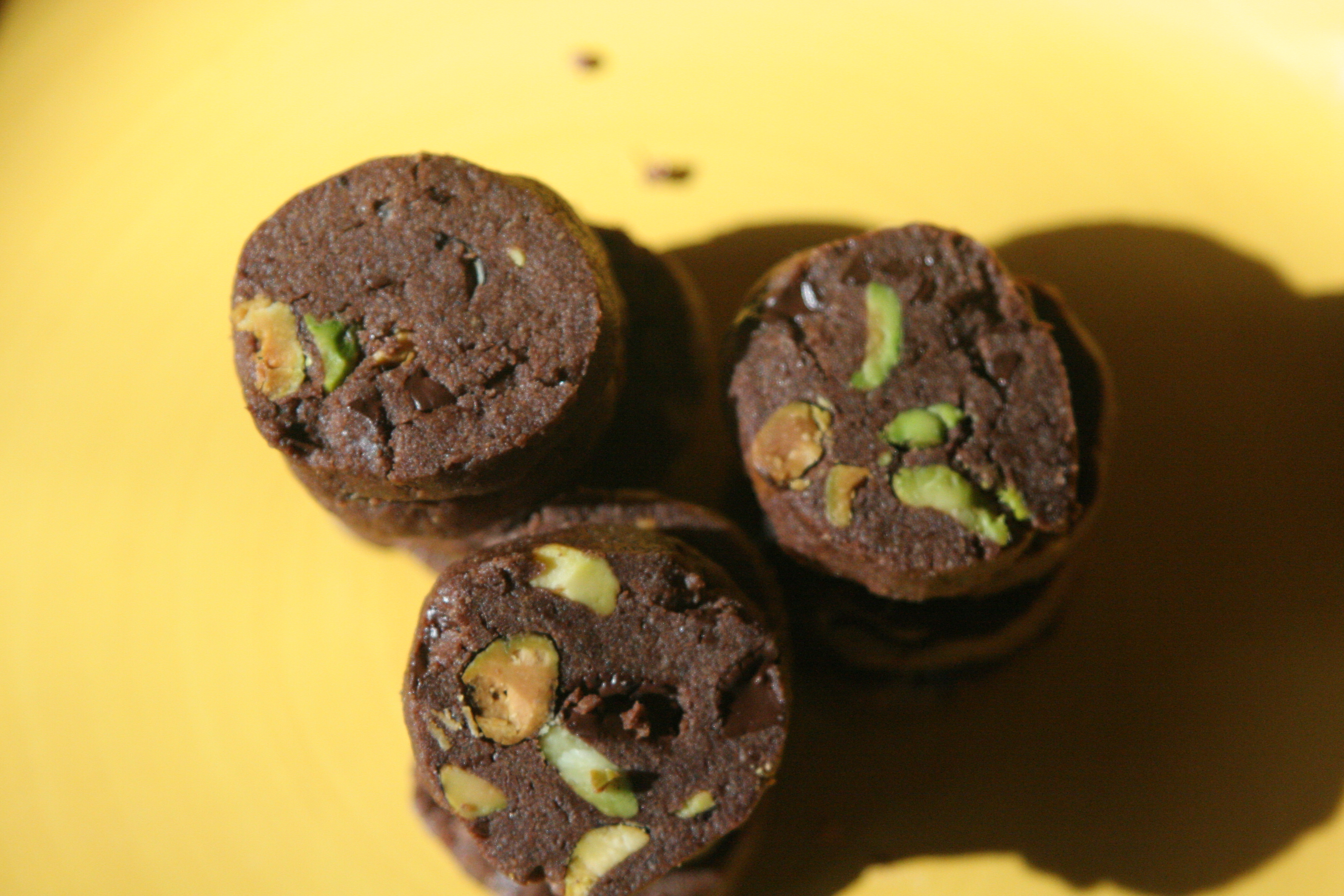
Dark Chocolate Pistachio Cookies

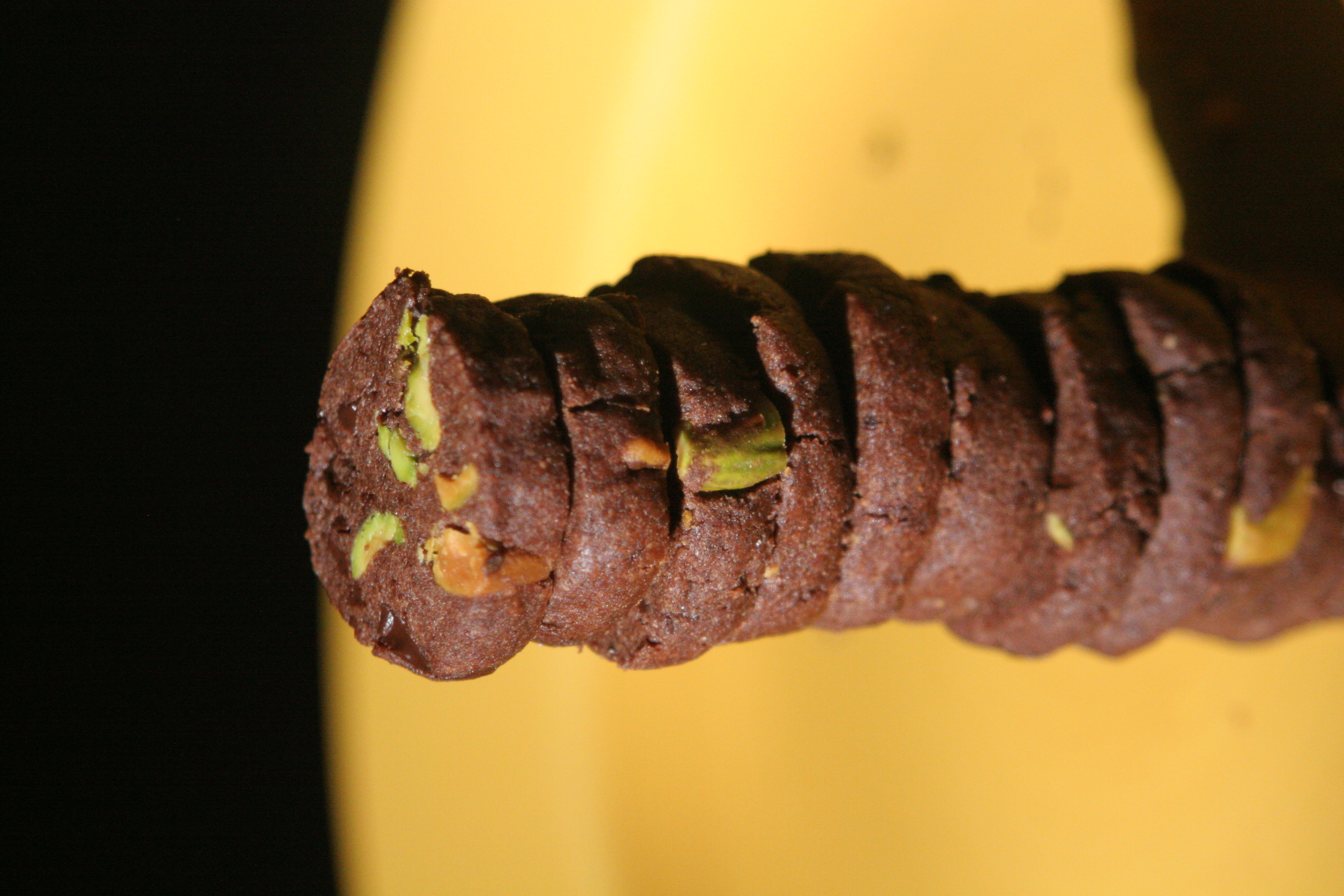
Stack of Salted Chocolate Pistachio Cookies

Imagine a tiny dark chocolate cookie with 70% chocolate chunks, roasted pistachios, and delicate, barely there crystals of sea salt. It contains no eggs so it is actually a lot like a chocolate shortbread–just on this side of crunchy while maintaining a slight softness and density of crumb in the middle. These are terrific cookies. I roll the logs of dough extremely thin, about 1 1/2 inches in diameter, so that I can eat tons of them without feeling bad about stealing them from everyone else.

These cookies are inspired by Dorie Greenspan’s Korova/World Peace cookies and I have tinkered with the recipe for the past three years. They began as the ideal recipe for a pregnant mama seeking a dark chocolate raw cookie dough to eat by the spoonful without fretting about raw egg consumption. (Incidentally my daughter is chocolate obsessed.)

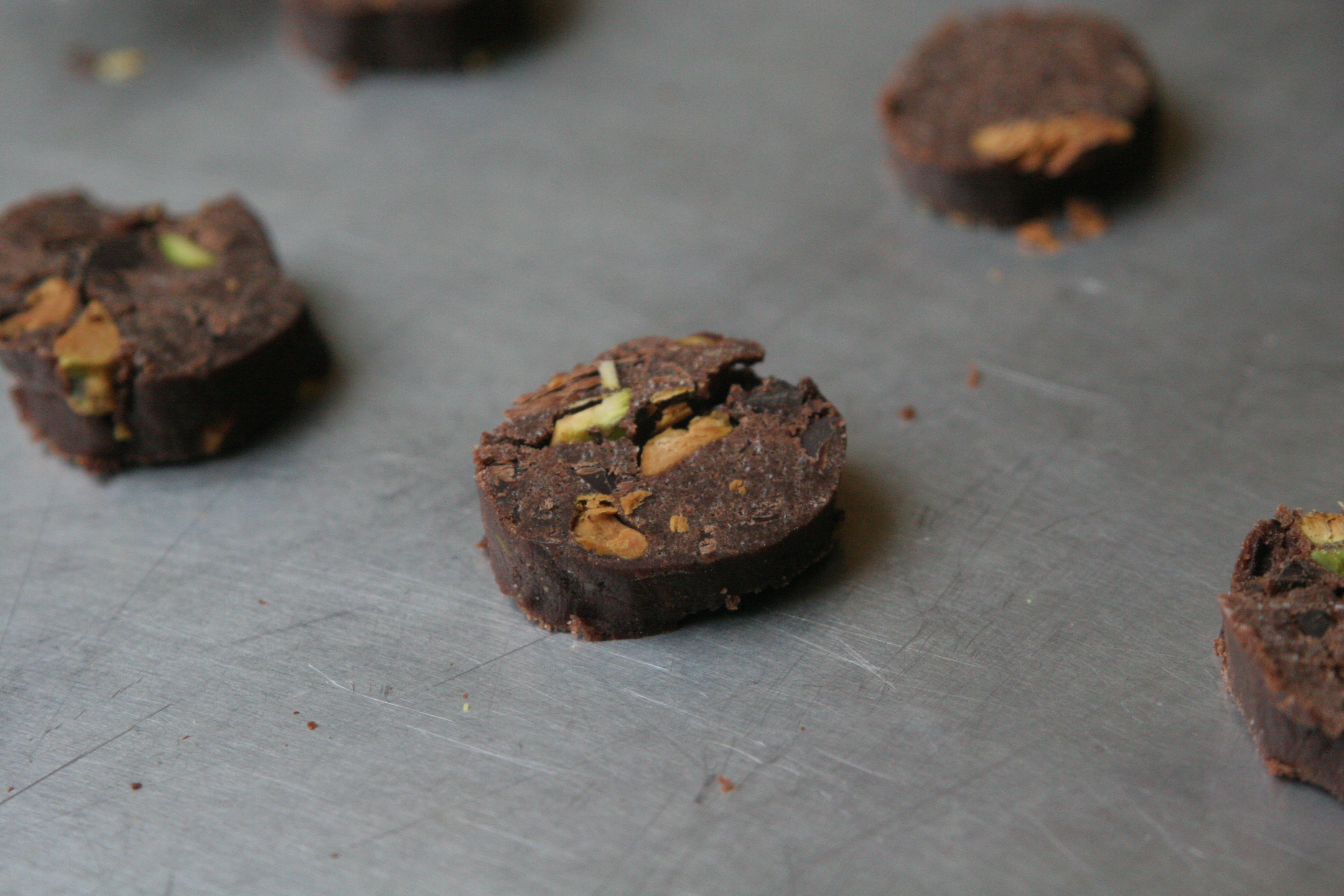
Raw Cookie Dough

As I have mentioned before, I am adamant that nuts must be pre-toasted before mixing into baked goods. They take on a really fragrant, enhanced flavor of (in this case) pistachios, one of my favorite nuts. For me, pistachios are redolent of the Arab Mediterranean and Sicily, usually with rose-water or orange flower water in desserts (more on a phenomenal meringue cookie with those flavors to come).

Pistachio gelato, pistachio macarons, pistachios in salads. I cannot get enough of them. They really sublimate the taste of this cookie.

Finally, my favorite thing about this recipe is that you can keep it in the fridge for a couple of months rolled into logs and wrapped tightly in plastic wrap. That way whenever you have a craving for freshly baked cookies or need to give a gift to your sweet neighbor whose Australian Shepherd has passed away (sigh….), you have some ready to go.

Three Stacks of Chocolate Pistachio Cookies

What are your favorite cookie ingredients? Best response wins my attempt at creating your cookie for you. Enjoy!

P.S. I apologize (kind of) for the butter and cream overload in the last two posts. As penance, keep an eye out for a tasty Moroccan inspired vegan soup to help you transition from winter to spring in my next post.

Salted Chocolate Pistachio Cookies

(48 tiny cookies)

Ingredients:

1 1/4 cup (175 grams) unbleached, all-purpose flour

1/3 cup (30 grams) Dutch process cocoa powder (see note below*)

1/2 teaspoon baking soda

11 ounces (1 stick plus 3 ounces) (150 grams) butter at room temperature

2/3 cup (120 grams) light brown sugar

1/4 cup (50 grams) sugar

1/2-3/4 teaspoon fleur de sel (less if it is finer sea salt)

1 teaspoon vanilla extract

5 ounces (150 grams) dark chocolate like 70%, chopped into smaller bits the size of a pea

1/2-3/4 cup (115-140 grams) roasted and cooled pistachios (you can rub skins off or leave them on)

1. Sift together the flour, cocoa powder, and baking soda.

2. In a standing mixer with a paddle attachment, beat the butter until it is fluffy. (You can do by hand, of course.) Add both sugars and beat for another minute. Add vanilla extract and salt and beat one more minute, scrapping down the sides.

3. Carefully pour in the sifted dry ingredients and beat until the dough just pulls together and looks crumbly. Add the chopped chocolate and pistachios and beat for another 15 seconds until just incorporated. You will not have a mass of traditional-looking cookie dough. When you squeeze some together in your hand it will clump together. This is right.

4. Take a big lump of dough and begin squeezing it together to form a log. I like to make them very thin–about 1 1/2 inches in diameter if you slice them into rounds. I find that squeezing works better than rolling it out on the counter with your hands play-dough style where it falls apart. You can make several smaller logs and freeze them separately or just two longer logs of dough if you plan on making bigger batches. Wrap logs of dough in plastic wrap and freeze for a minimum of 40 minutes or up to several months.

5. To cook, preheat the oven to 325 F. If you have parchment, use it. Some cookie sheets are better than others. No worries if you do not have any. Slice the cookies about 1/4 inch thin, space them out on your cookie sheet. They do not need that much room. Cook for 8-10 minutes, turning sheets 180 degrees and switching top and bottom sheets half way through the cooking. They will not look quite done since they are a butter based cookie, but that’s alright. Let cool completely. I never can resist eating a couple before the chocolate chunks have melted, but this is one cookie that is superior after it has cooled just a bit. Store in a closed container.

*Note: I have also had great success with natural unsweetened cocoa powder, especially Valrhona’s, but I like to cook them just a bit less because I feel that their more delicate flavor becomes obscured with the cooking time written as is.

Posted in Chocolate, Cookies, Pistachios | Tagged , , | 20 Comments

Crumpets with Clotted Cream

Homemade Crumpets with Clotted Cream and Blenheim Apricot Preserves

I thought about splitting this into two posts–one for the crumpets and one for the clotted cream. You see, this week I tried out a new clotted cream recipe to compete with my golden standby. I scrapped “The Great Clotted Cream-Off” for reasons that should be fairly obvious and decided to post the crumpet and clotted cream recipes together.

While clotted cream and crumpets are British, not at all Mediterranean, for me they represent my entrée into the Mediterranean. England was the first country I visited outside of the United States before heading to France and Italy for the first time. I was a teenager staying in a tall, red-brick London apartment with my family and grandparents and we ate these for a late breakfast after rousing ourselves from our jet lagged stupor. I remember the outer crunch of the crumpet tasting other-worldly alongside the slightly sweet, ultra-rich clotted cream, both delights that I never had tasted before. While in the past decade or so crumpets have been finding their way into our American supermarkets, they never tasted exactly the way I remember them.

Crumpets Cooling on the Rack

Soft and doughy in the middle, steaming when you bite into it.

Crispy on the outside with lots of holes for the butter or clotted cream and jam to seep in.

Heavenly.

Well, I have two recipes that bring the perfect balance of textures and flavors straight to your kitchen.

Clotted Cream

The clotted cream, if you have never tasted the real thing, is surreal. A lot of people substitute marscapone for its similar consistency, but it doesn’t taste remotely the same. Not for those avoiding a high-fat diet, clotted cream is organic (ideally raw) cream that has been slow cooked on the lowest possible heat setting for at least a couple of hours and sometimes overnight. You simply skim the top as the liquid slowly evaporates and then refrigerate your clotted cream until you are ready to serve it up. There is really not much more to it than that.

I tried a new recipe from a recent favorite book of mine where one is called to mix milk and cream together, let it rest for 48 hours, double boil it, skim the clotted cream as in my method, and finally strain it overnight in the fridge. Unfortunately, the top of the cream began to melt instead of clotting. I like the book so much that I am willing to try it again, but without the double boiler. I was intrigued by the prospect of a tangier clotted cream and imagine that it would taste somewhat like a good cultured butter, but next time I will use my method for skimming.

Dials above my awesome 1950s griddle/range/oven

Making the crumpets is a breeze if you 1. already have muffin rings, 2. have exceptionally clean empty tuna cans with the top and bottom cut out or 3. don’t care what shape your crumpets end up taking. If you have a griddle–electric or stove top–it also makes the cooking process quick. I do mine in two batches and I’m done.

Crumpets Cooking on the Griddle

You have one other option when cooking your crumpets. You can cook them on both sides by flipping them a little over half way through cooking (when the glossy look of raw dough/batter acquires a dull appearance), which crispens both sides. Yet, if you want “real” crumpets with all of the tiny little holes to fill with melted butter or clotted cream, you should only cook them on one side. You may think that the middle seems undercooked, but when you toast them the next day (or an hour later because you simply cannot wait) they turn out absolutely perfect. And don’t forget that they continue cooking just a little bit once you put them on the cooling rack. My family adores these and I have been itching to try a multi-grain one so expect a recipe for that soon too.

Classic Crumpet Recipe

(makes 10-12)

adapted from The Bread Bible, by Rose Levy Beranbaum

Ingredients:

2 cups plus 3 tablespoons (312 grams) Flour

4 tablespoons (40 grams) dry milk (or substitute scalded milk cooled to room temperature for the water below)

2 teaspoon instant yeast

1 teaspoon sugar or honey

1 to 1 1/2 teaspoon salt

1 1/2 cup plus 4 tablespoons (just shy 400 grams) water, slightly warm–divided in the recipe

1/2 teaspoon baking soda

2 teaspoon melted butter, ghee, or cooking oil for griddle and muffin tins.

Empty and cleaned tuna cans, or English muffin rings

1. Mix together the flour, dry milk, yeast, sugar, and salt with a mixer on low-speed until combined. Slowly add in the 1 1/2 cup warm water and beat on medium for about 5 minutes until smooth. (You can do this by hand, but it will take a good 8-10 minutes of beating.)

2. Let the batter rise in a plastic-wrap covered bowl until it has doubled in size, about 1 hour.

3. Mix together the baking soda and last 4 tablespoons of warm water in a separate bowl and then add to the batter and mix well. The batter will deflate. Cover again with plastic wrap and let the batter rise again until it has almost doubled once more and is filled with bubbles, approximately 30 minutes.

4. Heat skillet or frying pan to something between low and medium low with rings on top (if using at all) to preheat too. It should be hot enough that a drop of water sizzles on it.

5. Cook your crumpets. Lightly brush the insides of the muffin rings and the skillet with the melted butter. Fill each ring about 2/3 full. They will puff up as they cook. If not using rings, just make small 4 in diameter rounds (or whatever shape they end up taking). Let cook for 7-10 minutes until the middle of the tops lose their shine and have a dull appearance. If you want to flip them, go ahead (see notes above), but you will lose some of your holes.

6. Transfer the cooked crumpets to a rack to cool and cook the rest of the crumpets until no batter remains.

7. You can eat them hot off of the grill or cool them for later. When cooled, you can put them in a bag to refrigerate until you are ready to use them. Toast and add either butter or clotted cream and, if you like, a perfect dollop of homemade preserves. I love strawberry lavender or Blenheim apricot preserves best on crumpets. (More on those recipes when I make my next batches in June and July.)

Clotted Cream Recipe

(makes enough for a blissful stomach and clotted arteries)

Ingredients:

2 pints of unpasteurized (also called “raw”) or low-heat pasteurized heavy whipping cream

1. Pour your cream into a non-stick or ceramic frying pan (like Le Creuset brand).

2. Turn the heat on the absolute lowest setting. If it’s too high and begins to simmer you will need to use a diffuser.

3. Check every half hour to make sure that the cream is not actively simmering. It should just sort of shiver as a layer of clotted cream develops on the surface. Every half hour or 45 minutes skim this off with an impeccably clean spoon into an impeccably clean bowl and put that into the fridge until your next skim.

4. Use the remaining cream however you would like (it is thickened and also tastes pretty amazing, but not as thick as the top clotted cream). Refrigerate all your clotted cream until ready for use.

Note: Although not traditional, I like to sprinkle the tiniest bit of sea salt on my clotted cream after I have already slathered it onto my crumpet, muffin, etc. Enjoy!

Posted in Breads, Breakfast, Jams and Preserves | Tagged , , , , | 8 Comments

Apple Oat Muffins with Brown Sugar Crunch

Muffin Batter with Brown Sugar Sprinkled on Top

Going to bed, I don’t know exactly what I am going to fix the next morning for breakfast. We have to be out of the house by 8am and I have early risers, so often we have some sort of hot cereal or toast. Nevertheless, in my subconscious breakfast brain, the first thing that I analyze when I wake up is if I have enough time for something a little bit beyond 15 minutes, a sort of weekday “Top Tier” breakfast. Top Tier runs the gamut from some sort of pancakes or waffles to eggs and pastries.

This morning my husband left for work before dawn and before I had actually roused myself from bed. As he bid me adieu, the first words I uttered were, “Could you turn the oven on to 400F?” Top Tier day.

If you have someone to preheat the oven for you, this breakfast is not actually time intensive at all and you can remain nestled in your comfy bed until….6:40am, like me this morning.

Muffin Cooling on its Side

This muffin recipe is jointly inspired by Kim Boyce’s ginger-peach muffin with oat flour and a King Arthur Flour whole wheat muffin recipe, each of which is delicious. I have several dozen riffs on this muffin, but a couple of techniques make these impossible to stop eating. (No, seriously, we usually eat them for breakfast and then lunch again.)

The most important thing is that you do not skip the oat flour/bran portion of the recipe. Oat flour may be my favorite whole grain flour to cook with because it is so flavorful and has an incredible texture nothing like wheat flours. It’s fine and silky and when you take a fingerful of the batter (which I always do), it tastes almost creamy. Finally, the addition of oat flour seems to make the muffins keep their texture and flavor the next day. I have tried so many pure wheat flour muffin recipes where the muffins taste mushy the following day.

Next, if you will be adding the walnuts (or whatever nut you love…hazelnuts anyone?) please take the time to toast and cool them. All nuts benefit from being toasted (your favorite peanut or almond butter, for example) since it just intensifies the nutty flavor, but I think toasted walnuts in muffins and scones taste nearly like another ingredient altogether.

Finally, do not skimp on the brown sugar that tops each muffin. Part of it caramelizes and then hardens and the rest of it turns crunchy and crackly.

Caramelized Brown Sugar in the Muffin Tin

One other trick that I learned from my favorite baking book of the last year, is to turn the muffins on their sides to cool as soon as they are cool enough to handle. This allows the steam to escape without literally steaming the bottoms of the muffins, which results in a mushy-wet outside instead of a perfect muffin crust.

Enjoy with a dab of phenomenal butter melting into the middle. Alternatively, the room-temperature muffins taste heavenly slathered with homemade clotted cream. Mmmmm. More on that in my next post.

What is your Top Tier breakfast? Please share your favorite ideas. I loooooove breakfast.

Apple Oat Muffins with Brown Sugar Crunch

Ingredients

3 Medium apples, peeled, cored, and chopped into little pieces

1/2 cup raisins (mixed golden and Thompson’s or flame are great)

3/4 cup toasted and cooled walnuts (toast until fragrant and golden brown)

1 cup oat flour or oat bran (or grind your own in your Cuisenart mixer from regular oatmeal oats; they won’t be fine like flour and that’s ok)

1/2 cup whole wheat or whole wheat pastry flour

3/4 cup unbleached all-purpose flour

1/4 (scant) cup dark brown sugar, plus several tablespoons set aside for topping

1/4 cup white sugar

1 teaspoon baking powder

1 teaspoon baking soda

1 teaspoon salt (kosher or sea salt work well)

3/4 (6 tablespoons) cube of unsalted butter, melted and cooled slightly

1 egg

1 1/4 cup buttermilk (or 3/4 cup yogurt/sour cream plus 1/2 cup milk) (you can even make your own buttermilk by adding 1 1/4 tablespoons vinegar/lemon juice to 1 1/4 cup milk)

1. Preheat the oven to 400F. If you have two 12 cup capacity muffin tins, grease every other one with either cooking spray or butter.

2. Melt and cool your butter.

3. Combine all dry ingredients and whisk: oat flour, whole wheat flour, unbleached all-purpose flour, 1/4 cup dark brown sugar, 1/4 cup white sugar, baking soda, baking powder, and salt.

4. In a separate bowl, whisk together the buttermilk, egg, and melted butter.

5. Combine the dry and the wet ingredients until barely combined and then fold in the dried fruit, apples, and walnuts.

6. Spoon into the prepared greased muffin cups, just over 2/3 full (if you like muffin tops like I do) and then sprinkle about 1 teaspoon of brown sugar over the tops.

7. Pop into the oven for 5 minutes and then turn the oven down to 350F for another 15 minutes turning pans 180 degrees half way through cooking until a toothpick or skewer inserted into the center comes out clean.

8. As soon as they can be handled, turn them on their sides to cool. Eat warm-hot or let cool to room temperature.

Notes: I have swapped out fresh cherries for all the fruit and nuts, done just blueberries and apples, pears and blueberries, peaches and apricots, blackberries and toasted walnuts, sour cherries and white chocolate, cardamom and apples, etc. It’s really versatile.

Posted in Breads, Breakfast, Whole Grains | Tagged , , , | 8 Comments